

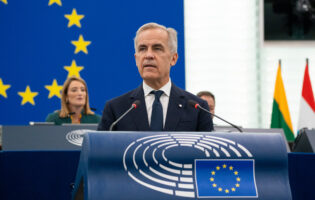
Canada, the EU, and a Fragmenting Global Economy
Last week, European Commission President Ursula von der Leyen and Canadian Prime Minister Mark Carney spoke on successive days before the European Parliament in Strasbourg. During her annual State of …
Episode 155: The Transatlantic Investment Relationship
Investment is the backbone of transatlantic trade, but foreign direct investment between the United States and Germany has fallen in both directions in the past year. The German Economic Institute’s …

New Rules of the Game in the Pharmaceutical Market
Austerity measures in the German healthcare system and the new U.S. pricing regime The national and international rules of the game have changed for the German pharmaceutical industry. At the …

German Reforms: Progress Ahead
From stagnation to mini-boom No other major economy has fared as badly as Germany in the last few years. In 2025, real GDP surpassed its pre-pandemic level of 2019 by …
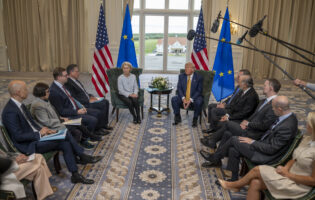
One Year Later, Can the Turnberry Agreement Hold?
Just shy of a year ago, on August 21, 2025, the United States and the European Union announced their Framework on an Agreement on Reciprocal, Fair, and Balanced Trade that …
Recent Authors
AGI provides knowledge, insights, and networks as tools to solve the challenges ahead.
Support Our WorkEpisode 152: How to Win a Trade War
The global economic landscape is contested between China and the United States, with America’s partners such as Europe also playing important roles. China has pursued policies of one-way dependencies, and …
The Fight over the Next EU Budget
Negotiations over the next European budget, known as the Multiannual Financial Framework (MFF), have exposed deep divisions among member states. So-called ‘frugal countries,’ led by Germany, Austria, and the Netherlands, …
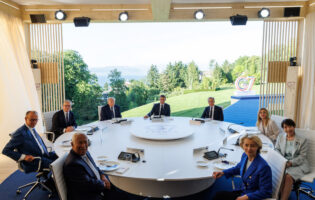
The Macroeconomy Strikes Back at France’s G7 Summit
The mantra of “manufacturing overcapacity”—in other words, China’s unfair competitive advantage in world markets owing to heavy state and provincial subsidies—has dominated the geoeconomic narrative on either side of the …

In Search of Reforms
Why Merz is Struggling to Put Germany on a Growth Path Those who expected the Merz government to quickly fix Germany’s sluggish economy have good reasons to be disappointed. So …
Episode 146: European Manufacturing and Global Trade
German industry is facing headwinds: a sluggish domestic economy, instability in the transatlantic trade relationship, and unfair global trade practices. Bertram Kawlath, the president of Europe’s largest industrial association (VDMA), joins The Zeitgeist to assess trends in the global …
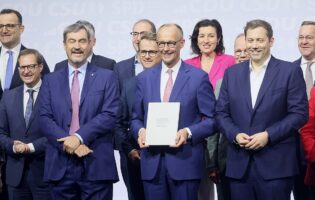
AGI Asks: Assessing the First Year of the Merz Government
Friedrich Merz was sworn in as Germany’s chancellor on May 6, 2025. The country faces its biggest challenges in a generation: a sluggish economy, Russia’s ongoing aggression in Ukraine, a …
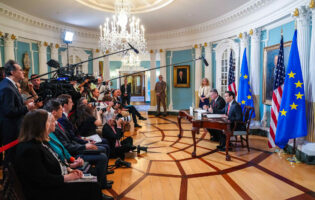
Can a Critical Minerals Pact Compartmentalize Transatlantic Trade?
On April 24, U.S. Trade Representative Jamieson Greer and EU Trade and Economic Security Commissioner Maros Šefčovič agreed to an Action Plan for Critical Minerals Supply Chain Resilience, committing the …
Public Debt: From a Stopgap to a Threat?
Public debt is in the spotlight. According to the IMF, global public debt stands at 93 percent of global gross domestic product (GDP). By the end of the decade, IMF …
Episode 144: Economic Resilience as Economic Security
The world’s leading economies are putting economic security at the top of their policy concerns. Among them, the European Union is taking a risk-based approach that seeks to deter weaponizable …