
United States Holocaust Memorial Museum via Wikimedia Commons
Far Beyond a Name
Kevin Ostoyich
Valparaiso University
Prof. Kevin Ostoyich was a Visiting Fellow at AGI during the summers of 2017 and 2018. He is Professor of History at Valparaiso University, where he served as the chair of the history department from 2015 to 2019. He is also Guest Professor at the Center for Applied Policy Research at Ludwig Maximilian University of Munich and Historian for the Florence and Laurence Spungen Family Foundation. Prior to moving to Valparaiso, he taught at the University of Montana. He has served as a Guest Professor at the Institute of Bavarian History at Ludwig Maximilian University of Munich, Fellow at the Käte Hamburger Kolleg at Ludwig Maximilian University of Munich, Eadington Fellow at University of Nevada Las Vegas, Fellow at the Center for Advanced Studies at Ludwig Maximilian University of Munich, Distinguished Guest Professor at Shanghai University, Senior Fellow at the German Historical Institute Pacific Regional Office/University of California, Berkeley, Research Associate at the Harvard Business School, and Erasmus Fellow at the University of Notre Dame. He currently is an associate of the Center for East Asian Studies of the University of Chicago, a board member of the Sino-Judaic Institute, and an inaugural member of the Shanghai Jewish Refugees Museum International Advisory Board. He has published on German migration, German-American history, the Holocaust, and the history of the Shanghai Jews. He holds his BA from the University of Pennsylvania and his AM and PhD from Harvard University.
While at AGI, Prof. Ostoyich conducted research on his project, “The Wounds of History, the Wounds of Today: The Shanghai Jews and the Morality of Refugee Crises.” The Shanghai Jews were refugees from Nazi Europe who found haven in Shanghai and thus escaped the Holocaust. For this project Ostoyich interviewed many former Shanghai Jewish refugees and conducted research at the National Archives at College Park, MD, and United States Holocaust Memorial Museum. At Valparaiso University he co-teaches a course titled “Historical Theatre: The Shanghai Jews,” which fuses the disciplines of history and theatre. To date, he has written and produced four original plays with university students based on the history of the Shanghai Jewish refugee community: Knocking on the Doors of History: The Shanghai Jews (2016), Shanghai Carousel: What Tomorrow Will Be (2019), The Singer of Shanghai (2020), and Lyrics and Laughter from Shanghai: A Relevant Cabaret Evening with Historical Commentary (2025). He has been involved in the creation of two films: Gary’s Letter (2024) and Three Girls of Shanghai (2024).
Click here for an article by Ostoyich on the Shanghai Jews.
He is currently trying to interview as many former Shanghailanders as possible. If you would like to be interviewed or know someone who might want to be interviewed, please contact Professor Ostoyich at kevin.ostoyich@valpo.edu.
Peter Arthur Gray’s Search for Identity and Trust
Peter Arthur Gray has gone by many names over the years. When asked to identify himself at the beginning of an interview in his home in Walnut Creek, California, he replies, “I am Peter Arthur Gray. But I had many name changes in my day, but today, that is who I am.”[1] Sometimes seemingly simple questions are not so simple after all. Peter Arthur Gray started life as Peter Adolf Kosse. Born in the late 1930s to Jewish parents in Berlin, Germany, Peter soon became a refugee in Shanghai, China. In the years that followed in Shanghai and then San Francisco, Peter’s name changed multiple times. The concomitant traumas induced by the turmoil of his family life and refugee experience have lingered decades beyond the Second World War. His life’s journey since arriving in the United States has been one marked by a search for identity and trust. Often, he has traveled on this journey alone. Since 1991, he has had a companion to help him through the ebbs and flows of self-exploration that has included study of religion, science, and philosophy. Ultimately, his search has led him far beyond a name.
Peter Adolf Kosse
Peter Arthur Gray was born Peter Adolf Kosse on April 23, 1937, to Siegbert Kosse (born in 1904) and Irmgard Lewinsohn (born in 1914).[2] Both Siegbert and Irmgard were from Berlin and most likely met there because they both worked for the film industry: Siegbert as an editor and Irmgard as an accountant. Peter has a hunch that his parents were brought together by the card game bridge. Both Siegbert and Irmgard were “fanatic” players. Siegbert was known for his skill at the game and even taught it to others.
For reasons that will be explained below, Peter’s knowledge of his father’s family is a “blank slate.” He knows more about his mother’s background: Irmgard was the daughter of Georg and Rosa Lewinsohn. Irmgard had one sibling, a younger sister, Elfriede (called Friedel). The Lewinsohn family had a small farm in the Berlin suburb of Nauen. Irmgard’s father fought in the First World War. After the war, the family gathered army surplus materials such as clothing from the area and sold them, becoming fairly affluent in the process. Peter knows that the family had strong Jewish roots—Irmgard’s maternal grandfather was a rabbi, for example.
Peter points out, though, that his mother was not a very religious person.
Siegbert and Irmgard got married only a few months before Peter’s birth. Peter wonders whether his parents’ marriage was ever one of love. One thing is for certain: The marriage did not last long. Sometime within the first two years of Peter’s life, Siegbert impregnated Irmgard’s teenaged sister, Friedel. Siegbert and Irmgard separated and most likely divorced in Berlin. By this time, the Nazis were pressing hard on the Jewish population in Berlin and the rest of
Germany. Throughout the country, Jews started to look for a haven to which to escape. What they found, however, was that the doors of the world were closing to them. Irmgard desperately looked for a way to get out of Germany. She would later relate to Peter the troubles she had trying to find a way out of the country: After work, she would go to the various shipping companies and search for tickets. After months of hard luck, tickets came her way fortuitously through a heated game of bridge. Peter explains,
One day, while she was playing bridge, she was playing against another couple, I don’t know who her partner was, but that’s not important. The important part was that the couple played very badly, and especially the woman that the man was with—I don’t know whether that was his wife, or a friend, or a girlfriend. Anyway, during the bridge game, things got worse and worse for this couple. He finally…got up, took the cards, slammed them on the table—everything went flying—and he said, “You know Bertha, I am not leaving for Shanghai with you. You can do what you want. I can’t stand anybody playing so poorly.” So, my mother heard this, of course. And after over a year trying to get these tickets, she found somebody who…maybe could sell her some tickets. And after talking to this man…he said, “Yes, Yes, sure. I’ll sell these tickets. I’m not leaving with this woman.”
Thus, due to a blow-up over bridge, Irmgard finally got the tickets she had been trying desperately to acquire, and she and Peter left Berlin in summer 1939. Peter was approximately two-and-a-half years old at the time.
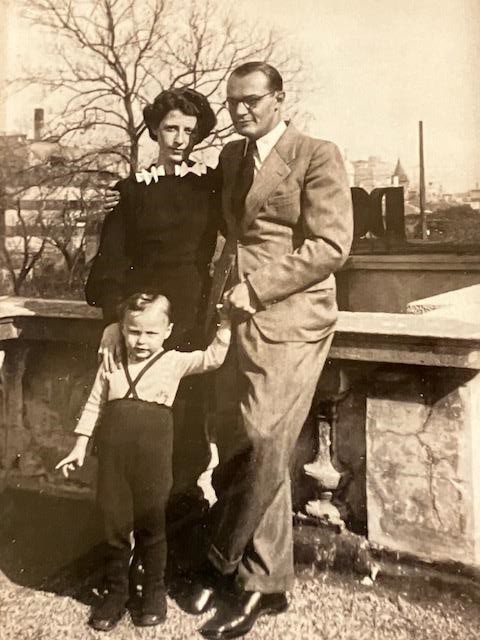
(Photo Courtesy of Peter Arthur Gray)
Irmgard had tried to convince her parents to go to Shanghai with her and Peter.
Nevertheless, her father flatly refused. Peter explains that his grandfather was a “stalwart German citizen” and proud veteran of the First World War. This is a sad refrain one often encounters in the stories of many former Shanghai refugees like Peter: Grandparents who refused to flee to Shanghai because they felt German and believed service in the First World War would protect them from the clutches of the Nazis. As with so many other Jewish grandparents living in Germany during the late 1930s, Peter’s grandfather was wrong.
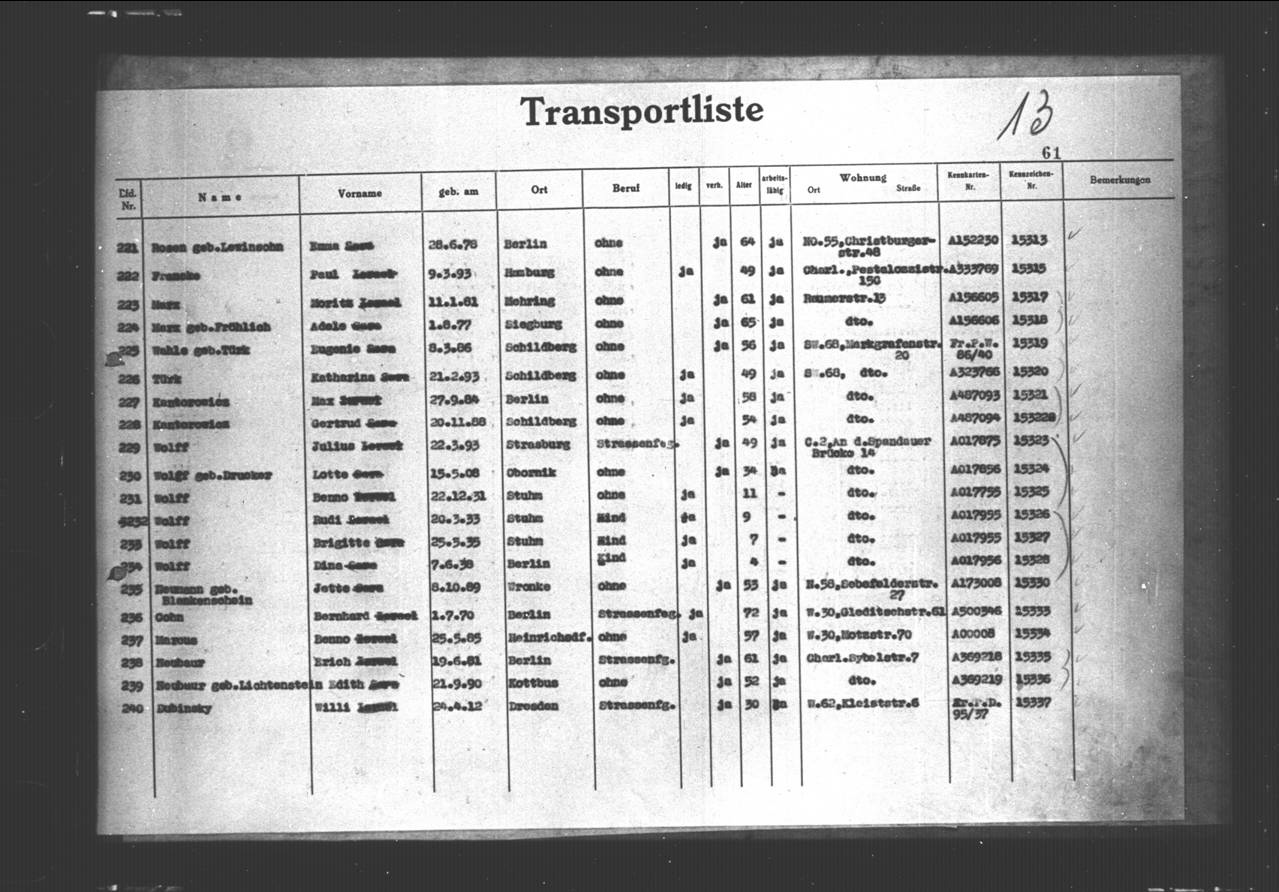
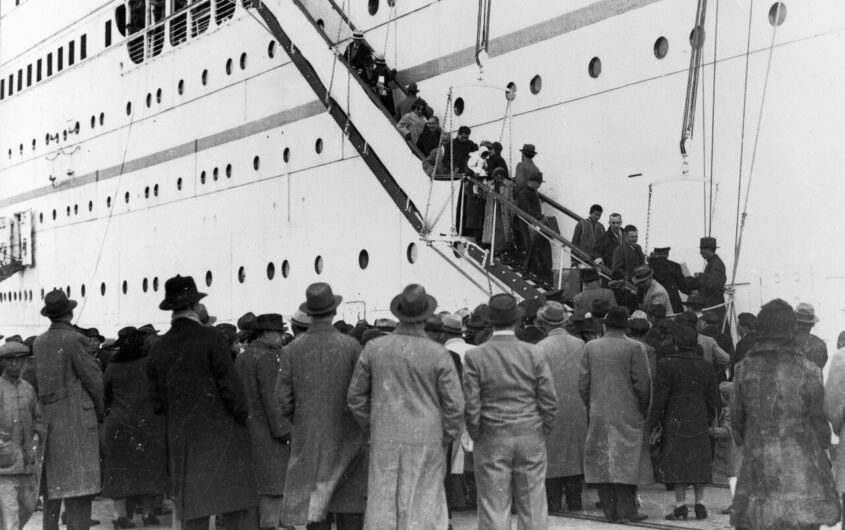
Thus, Irmgard took her son on a train to Genoa, Italy, alone, and mother and son journeyed to Shanghai on the SS Conte Verde of the Italian Lloyd Triestino line. They arrived in Shanghai on August 7, 1939.[3] Siegbert also made it to Shanghai but did so separately from Irmgard and Peter. Siegbert left Berlin either before or after Friedel gave birth to a girl at fifteen years old. Abandoned by Siegbert, Friedel eventually married a Jewish man from Dresden named Willi Dubinsky. On August 15, 1942, Friedel, Willi, and the little girl were deported from Berlin on Transport 18, Train Da 401. Three days later, on August 18, 1942, they were shot along with approximately 1,000 others in forests outside of Riga. Thus, Peter never met his half-sister, Mathel Dubinsky.[4]
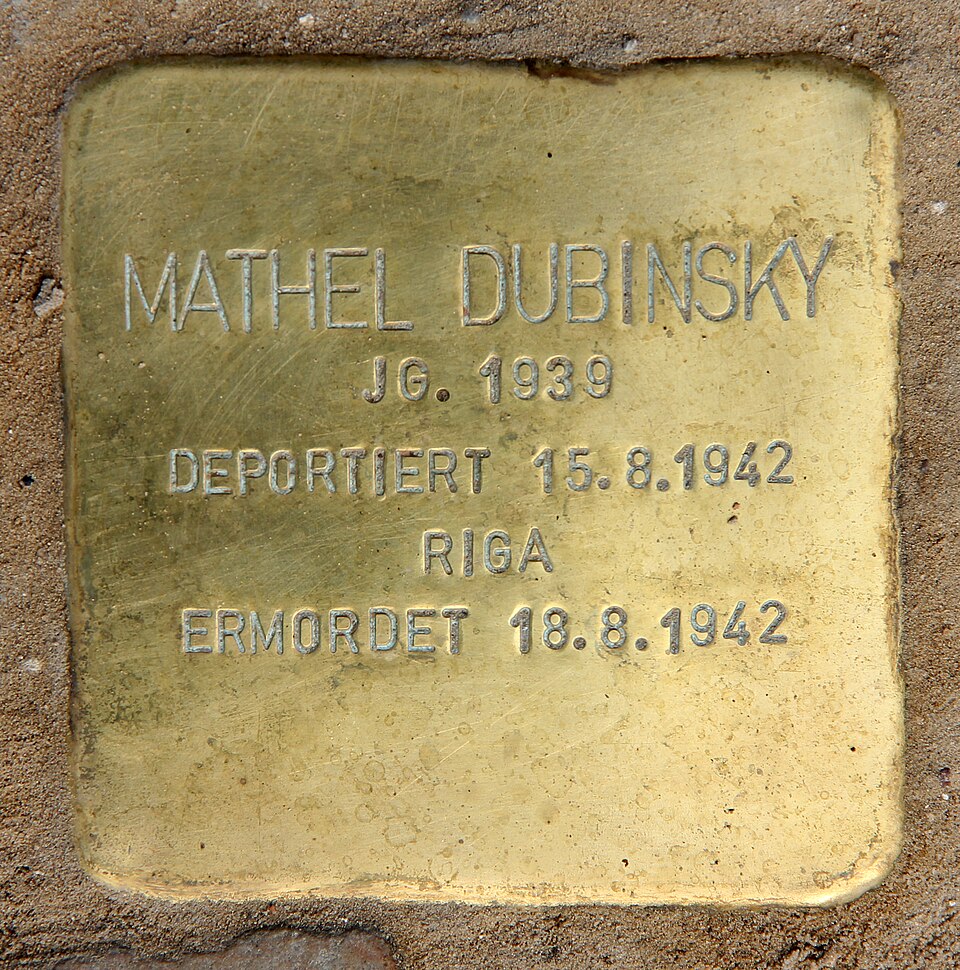
Peter’s earliest memories as a two-and-a-half-year old in Berlin are simply feelings of unhappiness and sadness associated with the parting of he and his mother from his mother’s parents. Later, in Shanghai, Irmgard was able to correspond with her parents for a while via post, but then the correspondence stopped. Irmgard suspected something terrible had happened to her parents. Peter believes that, after the war, his mother got confirmation through Jewish authorities that her parents had been killed. Years later, Peter went to Yad Vashem in Israel and found out that his grandparents, Georg and Rosa Lewinsohn, had been killed in Auschwitz in 1942.
In Shanghai, Irmgard struggled with very little money as a single mother raising her child in a very foreign land. She tried to adjust as quickly as possible; Peter remembers his mother trying to learn English from a book, for example. From the very beginning, they lived in the poorest section of the city, known as Hongkew. Many refugees were also extremely poor and lived in this district. Others who had the means to do so lived in the International Settlement on the Western side of the city or in the more affluent French Concession. Irmgard and Peter did not live in one of the barracks-style homes or Heime that housed the most destitute of the refugees. Rather, Irmgard was able to find an apartment on Chushan Road (present-day Zhoushan Road), which they shared with other refugees. Peter remembers the apartment as follows:
A terrible place with no running water. It was a V in the lane which was only partly covered. My mother used old boards to make a roof. This was our kitchen and my mother cooked on a flowerpot with egg[-shaped] coals. You had to fan the flames to keep it burning. No toilet; empty into honey bucket in the morning. Japanese teens threw in branches and stones and garbage. It was only partially enclosed, and the encroachment drove my mother wild since she was a very orderly woman.[5]
She had support from fellow bridge-player friends from Berlin, Heinz and Herta Cohn. Heinz and Herta had journeyed to Shanghai before Irmgard and Peter. Heinz was Jewish; Herta was not. Peter explains how helpful these friends were to Irmgard in raising him:
They often would babysit for me when my mother was working. [Herta] was non-Jewish but went with Heinz to Shanghai. Nice people! A huge emotional support for my mother. My mother and I were very poor, as you can see. Times were tough for us, and she alone had to make ends meet. A wonderful, resilient woman, but strict for me in my upbringing.[6]
In the period before December 1941, Irmgard was able to work for a time as an accountant for European firms in Shanghai.[7] Peter believes there was some interaction between his parents in Shanghai, but he does not have any clear memories of his father. Siegbert did not live in the apartment with Irmgard and Peter; rather, he lived in the Ward Road Heim. Peter was later told by his mother that his father stole money from her. Irmgard was terribly upset because she was saving the money to pay for her parents to come to Shanghai.
Shortly after stealing from Irmgard, Siegbert committed suicide. Peter surmises this may have been because Siegbert felt remorse for all the things he had done. The very little that Peter ever learned about his father came from his mother; suffice it to say, none of what she told him was good. Peter says that he attempted much later to find out some information about his father, but he never came up with anything. He believes his father committed suicide in September 1941. Three months later, the Japanese forcibly took over the harbor in Shanghai and gained control of the International Settlement from the British and Americans.
Peter Adolf Jensen (or Peter Adolf Kosse-Jensen)
Prior to the Japanese takeover, Irmgard cobbled together a variety of jobs, including that of a bar girl. This occupation is one that seldom finds mention in historical accounts of the Shanghai Jews given the taboo associated with it. It is clear though that Irmgard was far from alone in taking such work to provide for her and her son. Peter explains, “All I know is that [my mother] told me about [how] the women would get diluted drinks and drink with sailors at a bar, and I don’t know more than that. I mean, I assume other things happened.”
Sometime after Siegbert committed suicide, Irmgard met a Danish merchant marine named Ostergaard Jensen, and the two may have gotten married. Peter is not certain. He lacks any documentation of such a marriage but believes that his name changed at the time from Peter Adolf Kosse to Peter Adolf Jensen. It turns out it could have been changed to Peter Adolf Kosse-Jensen.[8]
Irmgard and Ostergaard did not have much time together in Shanghai. In the autumn of 1941, it was in the air that the Japanese were about to do something in Shanghai, and foreigner sailors started to leave the city. For example, the American 4th Marines left Shanghai in late November, right before the Japanese bombed Pearl Harbor and took over Shanghai on December 8, 1941. (Americans remember this “Day of Infamy” as December 7, but it was December 8 in Asia.) Peter explains that Ostergaard Jensen had shipped out from the Shanghai harbor with the other Danish merchant marines shortly before the Japanese attacked.
Faced with being, once again, a single mother in Shanghai, Irmgard set out to make ends meet in the city. Peter believes that at this time his mother worked as a milliner. Peter states, “She worked on women’s hats…made them…and sold them. So, you can see her as a person that has to make a living at all costs for me and herself.”
On February 18, 1943, the Japanese issued a proclamation that all stateless persons who had entered the city after January 1, 1937, had to move into a “Designated Area” within the Hongkew district by May 18, 1943. Given that Irmgard and Peter already lived within this area, they did not need to move. Peter remembers many refugees moving in around them during this time. From the time that the Designated Area was established until the end of the war, the movement of the refugees was highly restricted. If refugees wished to leave the Designated Area for any reason, they needed to be granted a pass. This process was often humiliating, and passes were not always issued.
Peter was too young at the time to be thinking much about Japanese officials. Peter’s earliest memories of Shanghai revolve around playing games with Chinese children in the lanes. He says, “I couldn’t speak Chinese, they couldn’t speak German, but we managed to be friendly and do stuff. [He laughs.]” Above all, he remembers playing marbles with the Chinese kids and other German refugee kids. He also remembers playing soccer a lot with the other kids. Peter has vague memories of playing with American children in the period before December 8, 1941. After this date, however, the British and Americans citizens in the city were designated as enemy combatants of the Japanese and either fled the city or were gradually put into internment camps.
When he became of school age, Peter started to attend the Shanghai Jewish Youth Association School, also known as the Kadoorie School after the Sephardic Jewish philanthropist who was the school’s main benefactor, Sir Horace Kadoorie. Many of the teachers in the school were Jewish refugees from Germany. Peter remembers the principal of the school, Lucie Hartwich, as well as Gunter Gassenheimer (who is frequently mentioned as a favorite teacher in Shanghailander accounts) and Leo Meyer (who was a popular physical education instructor and outstanding soccer player). Peter remembers this as being the time when he first realized he was Jewish. Whereas his mother did not stress religion at home, it was at the Kadoorie School that Peter learned Hebrew and Jewish traditions. The school organized events around the Jewish holidays, such as Purim. In this way, Peter learned more about Judaism. It was also at this time that Peter started to interact more with Jewish children. Up until this point, his main playmates had been the Chinese children who lived in his lane. Peter explains, though, that he was very much a loner as a child and did not have a “best friend” until after the war.
Peter believes that at some point during the war—perhaps 1944—Irmgard received an official letter from the Danish government that Ostergaard Jensen was lost at sea. By this time, however, there was another man in Irmgard’s and Peter’s life: Peter Georg Goldstein. Peter explains,
How did she meet him?… He was a tennis player. He came from a fairly wealthy family in Berlin also. His father…manufactured women’s apparel. And they were fairly wealthy, but that’s irrelevant, I think. The point is that she wanted to learn a sport or maybe she was looking for a man [Peter laughs] to help support her and…me. And she met him because he was giving tennis lessons. He was about eight years younger than my mother. A younger man… So, they met and they didn’t get married until later, but they cohabited during the war.
Peter Georg Goldstein was around 22 years old when he and Irmgard met. Goldstein moved in with Irmgard and Peter in the Chushan Road apartment. From this point, Goldstein was the father figure in Peter’s life. But, as Peter remembers, Goldstein did not have many skills other than playing tennis and was not really ready to help raise a child. Goldstein was only sixteen years older than Peter. Peter explains, “I never did get along [with him] very well.” Peter believes that he was bound psychologically to his mother, and that he and Goldstein always competed for her. Peter says that Goldstein would slap him around to show his authority or when Peter did not understand things. Peter sums up Goldstein’s parenting skills with the following words: “If it were now in America, he would be classified as a child abuser.”
One of Peter’s most vivid memories of Shanghai is of the bombing of Hongkew by American planes on July 17, 1945. Peter says that his mother had always told him that if there were a bombing, he was to run home immediately. Peter laughs and explains that he always listened to his mother:
I took off. I listened to my mother, because my mother was the key figure in my life. And I ran from Kadoorie School to…Chushan Road…that’s where we lived. And guess what? I was caught in the air raid. I was caught in the bombing. And…I was very, very lucky, because I survived bombs exploding very close…to me. I heard the planes and the roar and stuff. And, on the streets, the Chinese…had these big stands out, and they had these big boxes, where…somebody had noodles and vegetables and stuff…and I [dove underneath] one of those boxes…and these explosions all around me. I guess I must have been intuitive. Very scary, of course. I looked out, and there were people with blood all over… Luckily, I was saved. So, on that particular day, I did what my mother told me [he laughs] to do.
Unfortunately, Peter has additional unpleasant memories from Shanghai. He remembers frequently being beaten up by older Japanese children as he walked home from school. He explains, “They would pick on white kids and slap them around and beat them up.” He continues, “The Japanese, of course, during the war, had complete authority…. They were the overlords in the camp, in the ghetto. And they had…soldiers stationed there, and…some of them had [kids] there…and those kids would chase me and beat me up along the way home. And that was pretty traumatic.” After Peter told his mother about this several times, Irmgard decided to report what was happening to her son to the Japanese authorities. Peter explains how the Japanese officials responded: “She went with some women friends to report this. And, unfortunately, they threw her down the stairs. That was their answer. ‘To Hell with you!’” Peter thinks the matter may have been resolved by his walking with other children to prevent being singled out by the Japanese bullies.
In August 1945, Peter and the other refugees learned that the Americans had dropped a new type of bomb on Japan. He explains,
The Japanese had forbidden [the refugees] to have any…short-wave radios, on the penalty of death! But Jews always had some secret means of passing these around so that we would get some news. We’d get news from the Russian front about how the Germans were being beaten, and about how the Japanese were being beaten. And so, we heard about that, but we couldn’t even imagine what that [news about the atomic bombs] really was about. I was only…eight [years old] …. We heard that there was some extraordinary bomb that went off, but not understanding…really the implications of that.
Shortly after the Americans dropped the bombs on Hiroshima and Nagasaki, the Japanese left Shanghai. The disappearance of the Japanese was followed by the appearance of American sailors.
After the war, Irmgard, Peter, and Goldstein moved to Kuonming Road, where they lived in an apartment which they shared with another couple by the name of Waldman. Peter explains Waldman was a “tennis buddy of [Goldstein]. The two rooms had indoor plumbing and running water, a big step up.”[9] In 1946, Irmgard and Peter Georg Goldstein got married. Then one day there was a knock on the door. The man knocking: the no-longer-lost-at-sea Ostergaard Jensen!
Peter laughs as he describes the situation: “Jensen shows up, believe or not. So, somehow, they had an amiable talk about what happened. [My mother] showed him the communique that she had gotten, and said, ‘Hey, I’ve been with this man during the war.’” According to Peter, Jensen took the news in stride, and the matter was resolved civilly. Peter again explains that he does not know if his mother and Ostergaard Jensen had officially gotten married or simply had planned to get married. Regarding this historical ambiguity, Peter cautions that things could get rather murky during wartime—especially in Shanghai. Peter never asked his mother to clarify the details on this matter to him. He explains,
Unfortunately, I never talked to my mother [about this.] There’s a lot of things that I would have liked to talk to her about but was never able to…. After, when [I got] older, I had lots of problems [he laughs] with my parents. I don’t know why exactly, maybe because of all these traumatic situations. And I wasn’t…there often enough to really get down to some of these ideas which would have elucidated the story.
Regardless of what the official details may have been, the reality was that although Ostergaard Jensen was still alive, Irmgard was now with Peter Georg Goldstein. Thus, Jensen exited the scene for a second time, and this time for good.
Peter Adolf Goldstein (or Peter Adolf Goldstein-Kosse)
Irmgard and Peter Georg Goldstein got married in the Café Lion on 26 Muirhead Road in Shanghai on April 7, 1946. Although it is not clear when, Peter Adolf Jensen (or Peter Adolf Kosse-Jensen) became Peter Adolf Goldstein (or Peter Adolf Goldstein-Kosse). In 1947, Irmgard, Peter Georg, and Peter left Shanghai for the United States. Irmgard and Peter Georg had initially thought of going to Australia, because Peter Georg had a sister who had left Shanghai for Australia. But then Peter Georg was told by some of the American soldiers with whom he played tennis that, given he was such a good tennis player, he could be valuable in the United States. Thus, Peter Georg and Irmgard applied for the United States as well. The family’s number came up for American visas first, so Irmgard and Peter Georg decided to go to the United States. Irmgard, Peter, and Peter Georg Goldstein boarded the U.S. Troop transporter SS Marine Adder. Peter remembers sleeping in bunks and stopping in the Hawaiian Islands, which he thought was paradise after the hot, humid, and dirty Shanghai.
As American shores approached, Shanghai receded into Peter’s past. As he reflects now on that city of his childhood, Peter offers the following summation:
Hey, we survived! That’s the important thing. Well, if you look at it, we should all say, “What a blessed place Shanghai was!” That, no matter, with all the disadvantages, we survived. We were hungry, but we weren’t starving. I mean we were very hungry a lot of times, but we were able [to survive].
The initial sights of San Francisco dazzled the young refugee:
That was just one of the most magnificent days of my life! When I was about ten years old. It’s four o’clock in the morning, and the lights, and the dawn. And it was just one of those pictures…. I’ll remember that forever, the awe of “Here’s the Promised Land! Here’s the United States!” And it was so beautiful, all these lights! I was so impressed by…going under the bridges…and seeing the silhouettes of the big buildings. “Wow!” Well, they had some big buildings in Shanghai, too. But much more…impressive when you feel that you’re free!
But what was that young refugee’s name as he stepped foot in San Francisco? The Alien Registration Receipt Card that was issued to Peter upon his admission into the United States on November 14, 1947, did not identify him as Peter Adolf Goldstein, Peter Adolf Goldstein-Kosse, Peter Adolf Jensen, or Peter Adolf Kosse-Jensen. The card was issued to “Peter Adolf Kosse.”[10]
Arrived in San Francisco, Irmgard, Peter Georg, and Peter received assistance from the Jewish Joint Distribution Committee. They were given a choice to go to various places in the United States—Peter remembers Albuquerque being one of the options—but he says his parents were told that San Francisco was the best place in the country, so they decided to stay there.
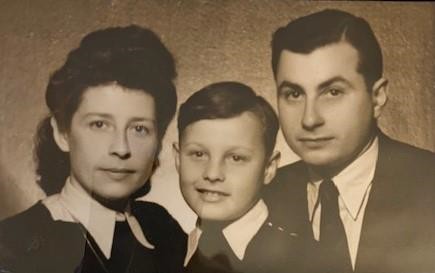
Irmgard and Peter Georg both found jobs and established the family in their new home.
Peter explains that the hoteliers, the Levine brothers, were very helpful to Shanghai refugees who settled in the San Francisco area. Peter Georg applied with the Levine brothers and received a job as a waiter in one of the hotels. He also took a second job as a traveling salesman selling clothes. Peter says that his mother was always very concerned about money and took two jobs as well. She began selling dresses in department stores. Peter remembers his mother working for the prominent department store, I. Magnin & Co. She started out there in sales.
Then, for a while, she did in-store detective work. She did not like that, though, and she returned to sales. Meanwhile, Peter attended school. He believes the English he learned in Shanghai served him well, and he earned good grades in school. He also became extremely good at tennis, receiving instruction from his stepfather. He explains, “I was pretty good at Lowell High School, I went up to number two—I never got to one…. And Lowell High School is the best tennis school in San Francisco, so I played fairly decent tennis.” Later, during the 1960s, Irmgard and Peter Georg (by this time Peter George Gray) worked in real estate in San Bruno, but Peter was gone by then.
Peter Arthur Gray
In 1953—approximately five-and-a-half years after arriving in San Francisco—Irmgard, Peter Georg, and Peter became American citizens.[11] They decided to Anglicize their name, and it was upon Peter’s suggestion that the three took on the surname Gray. Peter says this was after Thomas Gray, the poet of the eighteenth-century poem Elegy Written in a Country Churchyard. He says that he was then reading and analyzing the poem in literature class and liked the name Gray because it was “short and sweet that fit into our plan to assimilate into American culture as soon as possible. Gray, not white or black, neutral.”[12] The change of Peter’s middle name from Adolf to Arthur requires no explanation.
The lingering confusion of Peter’s name is underscored by the fact that the naturalization notice from 1953 refers to Peter as “Peter A. Goldstein-Kosse aka Peter Arthur Gray.”[13]
As a teen, Peter Arthur Gray bristled under the control of his parents and sought to strike out on his own. He describes his mother as very strict, very clean, very precise, and very punctual. In other words, “She was quite German in her attitudes.” She was always active and working. He says, “I don’t know exactly how [he laughs] loving she was, but she was very protective. Maybe overly protective.” Overall, she was “a driven, no-nonsense type.” In one word, she was “industrious.” As he reflects on his mother and the difficulties he had living under her control, he says that he now understands “it was difficult for her, being a single mother in Shanghai.” But, as a teenager in San Francisco, he wanted to break free. He explains,
It became difficult for me to deal with our relationship, because she had very specific ideas about life, and I don’t know how much those ideas were influenced by the Holocaust, being in Shanghai, and so on, but I rebelled against her control, and I wanted to strike out by myself. And, I think it’s important that I did, because, if I didn’t, I think I would have been a much weaker personality somehow.
Peter adds that his mother’s personality did soften toward the end of her life, especially when she was around her grandchildren. He says that one thing she passed on to her grandchildren is an appreciation for cleanliness. He remembers how much his mother had struggled to achieve such cleanliness in an apartment which lacked a proper roof and was located in a filthy Shanghai lane.
The strained relationship between Peter and his stepfather in Shanghai continued in San Francisco and beyond. Peter remembers receiving constant verbal put-downs and broken promises. The relationship never really improved. Goldstein—Peter consistently refers to his stepfather as “Goldstein”—died in 2018 at the age of 96. The two men did, on occasion, later in life, talk a bit about Shanghai and tennis, but they never formed a strong emotional bond.
Ultimately, Peter sums up the relationship in one sentence: “I never had that good of a relationship with him.” Perhaps a simple fact sums up the relationship equally as well: Goldstein never officially adopted Peter.[14]
Reflecting on the parenting skills of Irmgard and Goldstein, Peter says, “Neither one of them, I think, had any childhood-raising lessons [he laughs] or appreciation… They weren’t psychologically astute about anything really. [He laughs.]”
After leaving home, Peter attended San Francisco City College briefly, but it did not go well. Peter explains that he was rather naïve at the time. He laughs as he thinks of his poor performance in college and says, “Girls got the better of me.”[15] A family member took Peter aside and recommended that he enlist in the U.S. Army to get some structure. Peter decided to do so. For the next twenty-two months—in the mid-1950s—Peter served in the Army.
Ironically, the U.S. Army sent Peter back to Germany. He was stationed in Bad Kreuznach near Frankfurt am Main. There, he often served as an interpreter due to his proficiency in German.
He did not like the experience and found himself using his American fists almost as much as his German words:
It was terrible because, there was still in 1955, so many Jew-haters. [He laughs.]… Unfortunately, or fortunately, whatever…I spoke the language. And here I am in my GI uniform, and you…go to a Gasthaus or a bar or whatever, and hear some of these drunk Germans…who didn’t know I was Jewish…And I got into quite a few fights. Luckily enough, my pals, who were in my squad…they’d stick up for me. Who knows who threw the first punch!
He explains this was ten years after the war, and “anti-Semitism was pretty prevalent there. [It was] still there.”
After serving in the Army, he went back to college on the GI Bill. He says, “It was wonderful. I got the GI Bill, and I went back to college. I was older and more mature. [He laughs.]” At first, Peter attended San Francisco State University, but he soon saw what was going on in the East Bay area with the Free Speech Movement and the Vietnam War demonstrations, so he decided to continue his studies at California State University-Hayward. During this time, in the mid-to-late-1960s, Peter embraced the hippie lifestyle in Berkeley.
Reflecting on these years, he says, “In the sixties, Berkeley was such a thrilling place.” He laughs as he shows a picture from the time that shows off the considerable length of his hair and moustache. He laughs again, and says, “I didn’t know you were going to record all these!”
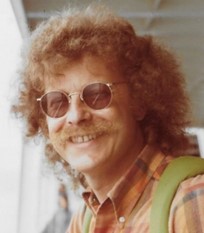
In the early 1970s, Peter began his career as a teacher in Oakland. He sees a connection between his career and his childhood as a refugee in Shanghai:
I guess I felt being a Shanghai kid, who’d gone through the war, and seeing the poverty of the black neighborhoods, and the situation of how blacks had to live in America, I felt very close to them, and felt that it would be a real boon to help out…. So, Oakland was predominantly black, and so, I wanted to teach there, and most of my teaching career was in black schools, predominantly black schools, in Oakland.
He explains further,
I felt like, I have to give something back to humanity, because Shanghai and escaping from Hitler was such a traumatic and such a terrible situation that—I’ve always been interested in education—but, I felt that was a way of giving something back to our society.
In the mid-1980s, Peter’s third marriage fell apart, and he retired from teaching in Oakland.[16] He felt adrift. Ultimately, he resolved to go to Israel to find his roots.
The Search for Identity and Trust
In 1985, Peter started to teach English to Ethiopian Jews in Israel. He stayed in the country for about six months. He recalls, “I was actually thinking of making Aliyah [moving permanently to Israel]. Not so much because I’m a religious Jew, but because of rootlessness…. I was disappointed that my seventeen-year-old marriage…had stopped, and I was looking for connections.” Then his recently divorced wife wrote him to come home because his mother was dying of lung cancer. Peter returned, and his mother died shortly thereafter in the autumn of 1986. Peter found himself in “a rootless place,” full of anger and disappointment about the relationship he had had with his mother and Goldstein.
Ultimately, he found himself searching for two things in particular: identity and trust. Having gone by many names in his life, claiming an identity had always been difficult. He explains, “I think I’ve been searching for identity throughout my life…. It’s a work in progress.” At one point, Peter decided to seek professional help in this quest. He went to a psychologist for about four to six weeks to work through his relationship to the Holocaust as well as his relationship with his parents. He explains that he had so welled up so much anger toward his parents, and the idea was to somehow get that anger out and transfer it:
I remember having a tennis racket and pounding a pillow…. And… [the people there] kept asking me, “Well, what do you want? What are you looking for in your life?” And that was my biggest problem…. I guess this is a good question, this whole identity thing, because I always had kind of a nebulous feeling that I didn’t really know who I was or what I wanted, what I was really looking for.
Peter’s struggles with identity were compounded by an underlying inability to trust anyone. Given the trauma that Peter experienced in Shanghai, with his father committing suicide; his being caught in an aerial bombing attack; his being bullied by Japanese children; and his being subjected to the failings of a young, inexperienced stepfather; Peter believes the Shanghai experience had left him bereft of trust. He explains, “I think my early life in Shanghai was tumultuous. The strange atmosphere, the bombings, the hardships…. You know, you lose trust. You lose trust in the world. You lose trust in what’s going on in life…. I had to regain that somehow…. You gain it through personal experience, and you gain it through knowledge.”
So, Peter searched for identity and trust, but he did so alone and with little success. Then something happened in 1991 that proved consequential for his search: He gained a helpful companion for the journey. Peter had been married on more than one occasion, but the marriages had ended in divorce—a subject he prefers to keep private for the benefit of everyone involved. In 1991, he thought it time to try “to find a new love connection.” After meeting a few women, Peter decided to write a personal ad. It read,
HEART OF GOLD[17]
Jewish male, 54, searching for soul mate, emotionally-mature woman, kind, loving, responsible, long-term relationship only. Teacher, previously married.
Meanwhile, Judy Vida composed a personal out of her own. It read,
Good-humored, tallish Jewish woman, 47, seeks good-hearted gentle man for relationship that begins with a shared love of jazz.
Judy received some phone message responses to her ad, but, for one reason or another, decided not to respond to any of them. She explains what happened next: “In August, I answered Peter’s ad, and then I recognized his voice and thought, ‘Oh! He’s someone who had answered my ad in June!’ So, it was very, as we say, ‘Beschert’ [meant to be].”
As Judy recounts the story of how the two met, Peter laughs and interjects that Goldstein told him at the time, “The only thing wrong with her [Judy] is that she’s too Jewish.” But Peter did not see this as a shortcoming at all. For, he yearned to learn more about Judaism and his roots. As Peter reflects on this time in his life, he says, “I wanted to learn something about Judaism. I’d never learned anything. I mean, being married [previously] to non-Jewish women, not having children brought up Jewish…I really had little experience with Judaism.” Judy and Peter met over coffee, and Peter mentioned to Judy that he was looking for his Jewish roots.
Judy informed Peter that she was exploring a more progressive type of Judaism known as Jewish Renewal, and she invited him to celebrate Sukkot [the Jewish harvest festival] at her home in a few days. She informed him that she was going to build a Sukkah or hut from corn stalks and said that, if he wanted, he could bring corn stalks and help build the Sukkah. Peter adds, “So, we built the Sukkah together.”
Thus, Jewish Renewal became the first type of Judaism that Peter explored in earnest.
He says he found it interesting and satisfying for him because it was emotional. He particularly liked the inclusion of music and dancing, or what he refers to as “touchy-feely stuff” about Jewish Renewal. Meanwhile, Peter started to read more about Judaism. Peter explains, “I am pretty assiduous. When I do something, I want to do it right. I spent a lot of time reading and getting involved in Judaism. At least understanding what it is about. And, I liked it.” Every two years, Peter and Judy would attend Kallahs, or national gatherings with Jewish Renewal members.
In 2000, Peter and Judy moved from Berkeley to Cleveland to accompany Judy’s mother, who wanted to be closer to family there. Peter describes Cleveland as being much more Jewish than Berkeley and as having Jewish enclave communities. He adds, though, that Cleveland lacked a Jewish Renewal community. In Cleveland, Peter started to get exposed to Jewish Reconstructionism, and his study of Judaism became even more serious. He even commenced studies with an Orthodox rabbi. But his interest started to wane when he began to feel what he was studying was becoming “very dogmatic.” He says, “This turned me off. I stopped studying.” Since that time, Peter has lost interest in religion. He explains that now he is “more of an agnostic thinker” and a devotee of science.
Peter ultimately found that he did not trust the concept of God: “I resent the idea of God in the sense that what happened in the Holocaust. Is there really a God who let that happen to this many Jews who were very pious and worked very hard to gain God’s favor?” He asks, “Where was God in the death camps when you really needed him?” He says, “I don’t know, some people say, ‘Yes, He was there,’ and other people say, ‘No, I didn’t see a sign of him. It was terrible.’” Peter has taken the side that there is no God. Listening to Peter speak on the subject, Judy says,
In our thirty years together, Peter’s had this ebb and flow with being involved Jewishly. And it’s interesting to follow because there’s a kernel there about God…. He did some counseling with our Berkeley rabbi, who connected this God issue to Peter looking for a father figure. And that, you know, when you talked about trust before. So, a couple times, Peter got close to feeling okay about this God thing. I remember there was a point at which—we were at a Kallah—Peter got really close to saying, ‘Oh yeah, you know, I get this God thing.’ And, I think, within months, my daughter died. And, I could see that Peter…cut off immediately from that whole…progression that he had made towards believing. And then there was a whole…ebbing away from being involved. But then when we got to Cleveland, there was a renewal of being involved in a new way, and he went even deeper and he grew a beard when he was studying with this rabbi. And [he] also did this Me’ah class, this…100 hours of study…a weekly class… So, I’ve watched Peter ebb and flow. So, now it’s not surprising to me that Peter is at an ebb right now.
For Judy, the important thing is the communal aspect of Judaism, and she hopes Peter will stay connected. Peter, himself, notes that as he has increasingly become “removed from people.” He does not know whether this is because he is getting older. He laughs and asks, “Is that a sign of trust or distrust? I don’t know what it is.” After reflection, he says, “I’ve always been a loner.” Peter explains that he spends a great of his time alone reading about the Holocaust and philosophy. But Judy adds that then periodically, Peter wants to reconnect with people. So, there is always that ebb and flow. When asked whether God can be trusted, Peter immediately says, “No. No. Definitely not.” Judy laughs and puts her arm around Peter, in an instant revealing the love and companionship she has offered and continues to offer this man who has struggled and searched for so long. Peter continues,
That’s the whole point…. That’s my point of view. That’s my experience with the Holocaust…. I’m much more [in favor] of an identity, of an individual, where I can think for myself, and I can formulate a healthy way of living and a healthy way of dying, so that I’m not that dependent on worrying about God or somebody to save me. I think I’m very happy that I have a Weltanschauung [world view] that makes sense to me and that I can live with. And so, I finally found an identity that I can live with and be with and be happy with. So, I think that’s very important. I’m 85 now, and it’s good to find a place where you feel comfortable.

Far Beyond a Name
What does Peter make of the names he has had over the years? Peter Adolf Kosse makes him think of reparations. He explains, “You know, I get some reparations from the German government, and in it, it says ‘Peter Adolf Arthur Kosse…Gray.’ All those names, they wanted to know those names so I can get reparations. They’ve got quite a few names there.” He laughs. Peter Adolf Jensen makes Peter think of his mother. He says the name only means something to him “in connection with my mother, it’s important, in connection [with] understanding what you have to do in Shanghai and under difficult conditions.” Peter Adolf Goldstein makes him think of tennis. Peter had competed under this name, and he was the number two player on a high school team that was known to be a powerhouse in the sport. Then the family became naturalized, and they changed the name to Gray because they “wanted to assimilate to American customs.” Peter recounts the story of when he had to make a report about the tennis team in front of the school during an assembly immediately after the name change:
The announcer says, “Now Peter Gray will come up and give you the report on the tennis team.” And everybody says, “Who the Hell is Peter Gray?”…. So I come there…and [everybody] says, “Hey, Goldgray, Goldstein! What the Hell are you doing up there? What’s going on?” So, it was embarrassing…. That was kind of a traumatic thing, but, you know, that’s part of life…. Peter Goldstein to Gray, so where is my identity here right? [He laughs.] My identity is shaping up over the years.
It may come as a surprise that the name Peter Arthur Gray is not really important to the man who has searched for so long for identity and trust. But when asked for its meaning, Peter says,
All it means is…all it is is some sort of designation. I mean, I don’t think it’s really important what the name is, because I feel…like my personality has integrated. So, the name is just an appellation…. It is just something. It doesn’t mean that much to me, because I think it important that, psychologically and spiritually, I feel integrated in my personality. And, I think that’s what’s important.
Regarding the two things he has searched for over the decades, Peter says of identity:
I’ve had to find out…especially emotional answers to my life by myself. And mostly through making a lot of mistakes, and then saying, “Okay, that is a mistake. What do I have to do to adjust? What do I have to do to correct that?” and…I think being with Judy for the last thirty years has helped me establish who I am more so, but I’m still seeking.
Regarding trust, he says, “Lack of trust has been an issue in my life. I am happy now that I can feel a lot more even in my relationships in life.”
Peter Arthur Gray has gone through many names during his life. He was born in a country that did not want him and had the name of a man who broke the trust of his mother, abandoned his half-sister, and committed suicide. He lived as a refugee under the protective eye of a mother who tried her best to raise her son under strained circumstances. His named changed according to his mother’s efforts until he finally made up his own in a new country. Ultimately, Peter Arthur Gray’s search inward has gone well beyond all the names listed on a German bureaucratic form. As he has searched for his identity, he has confronted a world in which trust is in short supply. His memories of his biological father are fleeting, his knowledge of that side of his ancestry a “blank slate.” He felt controlled by an overprotective mother and abused by a competitive “stepfather.” Ultimately, he broke free from both and set down his own path. By his own admission, he has made many mistakes on that journey, but he believes he has studied the mistakes “assiduously.” Since 1991, the self-proclaimed “loner” has been joined on the path by Judy Vida, a loving companion who has accompanied, observed, and helped him as he has journeyed through the ebbs and flows of religious exploration and social interaction. Although he has not “found God” and still works through the psychological scars of his life’s journey, he is clearly content with the integrated person he has become and the trusting embrace he now receives. Peter Arthur Gray has found that the contentment of feeling integrated and being loved is ultimately far more important than any name.
[1] The main sources for the article are the interviews Kevin Ostoyich conducted of Peter Gray (with Judy Vida in attendance with intermittent participation) on December 10, 2021, in Walnut Creek, California and of Peter Gray and Judy Vida via Zoom on August 9, 2022 (Ostoyich in Munich, Germany and Gray and Vida in Walnut Creek, California). Various details were gleaned from additional e-mail correspondence between Kevin Ostoyich and Peter Gray and Judy Vida.
[2] Peter Adolf Kosse was born in the Hospital of the Jewish Community in Berlin. Document titled English Translation of Birth Certificate, with official translation provided by the U.S. Immigration and Naturalization Service (May 19, 1953) and notarization of original statement by Public Notary in San Francisco (April 11, 1953). Document in the possession of Peter Arthur Gray and sent electronically by Judy Vida to Kevin Ostoyich on August 26, 2022. Irmgard was born on May 13, 1914. Marriage Certificate of Peter Georg Goldstein and Irmgard Kosse, April 7, 1946. Document in the possession of Peter Arthur Gray and sent electronically by Judy Vida to Kevin Ostoyich on August 25, 2022.
[3] A record of Shanghai refugees made by the Zangzow Police at some point after August 1941 lists August 7, 1939, as the date of arrival for Irmgard and Peter. The list is located at the China Families platform directed by Robert Bickers, Professor of History at the University of Bristol.
[4] Elfriede (née Lewinsohn) Dubinsky was born on November 28, 1923, in Nauen. She was deported with her daughter and husband from Berlin to Riga on August 15, 1942, on Transport 18, Train Da 401.
According to the Yad Vashem website, “On August 15 all deportees were taken from the assembly camp to a freight station located on Putlitzstrasse/Quitzowstrasse in Berlin-Moabit. This usually happened in the early hours of the morning. The deportees were forced to walk about three kilometers to the station via Jagowstrasse, Alt-Moabit, Turmstrasse, Perleberger Strasse, Havelberger Strasse and Quitzowstrasse. Those unable to walk were taken there by truck.” They arrived in Skirotava station on the outskirts of Riga on August 18. According to the Yad Vashem website, “Soon after their arrival all deportees were shot in the forests in Rumbula and Bikernieki, but there are reports that one woman, a nurse, survived.” Elfriede’s death is also documented in The Federal State Archives Memorial Book “Victims of the Persecution of Jews under the National Socialist Tyranny in Germany 1933 – 1945.” The victims list of those who were deported from Berlin on August 15, 1942, and killed in Riga on August 18, 1942, includes Willi Dubinsky (born April 24, 1912) and Marthel Dubinsky (born on August 20, 1939, in Berlin). According to the Federal State Archives Memorial Book “Victims of the Persecution of Jews under the National Socialist Tyranny in Germany 1933 – 1945,” Willi was born in Dresden. Pictures of the original deportation list reveal that Elfriede and Willi were both listed as married and Elfriede, Willi, and Marthel were all listed having the same place of residence (W.62 Kleiststr. 6): Photo with Willi Dubinsky listed in row 240, photo with Elfriede listed in row 241 and Marthel listed in row 242.
Information about the website that has posted the original photos and the sources used by the website is located at https://www.statistik-des-holocaust.de/info.html. Willi was Elfriede’s husband and Marthel was the biological child of Siegbert Kosse and Elfriede. Thus, Marthel Dubinsky (August 20, 1939 – August 18, 1942) was the half-sister Peter never met. Peter and Irmgard arrived in Shanghai approximately three weeks before Marthel was born. Stolpersteine (stumbling block memorials) for Elfriede, Willi, and Marthel Dubinsky were laid before Schönwalder Straße 64 in Berlin-Spandau on June 24, 2015.
[5] E-mail correspondence, Peter Gray to Kevin Ostoyich, July 12, 2022.
[6] E-mail correspondence, Peter Gray to Kevin Ostoyich, July 12, 2022.
[7] In a list of Shanghai refugees compiled by the Zangzow police at some point after August 1941, Irmgard’s occupation is listed as “clerk.” The list is located at the China Families platform directed by Robert Bickers, Professor of History at the University of Bristol.
[8] A record of Shanghai refugees made by the Zangzow Police at some point after August 1941 lists Irmgard Kosse Jensen (birthdate May 13, 1914). Peter is listed as Peter Kosse Jensen (birthdate April 23, 1937). A 1944 refugee records list has Irmgard as Irngard [sic] Kosse-Jensen and Peter as Peter Kosse-Jensen. Both records lists are located at the China Families platform directed by Robert Bickers, Professor of History at the University of Bristol.
[9] E-mail correspondence, Peter Gray to Kevin Ostoyich, July 14, 2022.
[10] Alien Registration Receipt Card issued by the United States Department of Justice Immigration and Naturalization Service to Peter Adolf Kosse, in personal possession of Peter Arthur Gray and sent electronically by Judy Vida to Kevin Ostoyich on August 25, 2022.
[11] Irmgard was naturalized as Irmgard Gray on April 14, 1953. At the time, Peter was still under the age of sixteen. He turned sixteen on April 23, 1953. On July 6, 1953, Peter was naturalized as Peter Arthur Gray. Document A6806202, dated July 6, 1953. Document in the possession of Peter Arthur Gray and sent electronically by Judy Vida to Kevin Ostoyich on August 26, 2022.
[12] E-mail Correspondence, Peter Gray to Kevin Ostoyich on July 12, 2022.
[13] Document A6806202, dated July 6, 1953. Document in the possession of Peter Arthur Gray and sent electronically by Judy Vida to Kevin Ostoyich on August 26, 2022.
[14] E-mail correspondence of Peter Arthur Gray with Kevin Ostoyich, September 5, 2022.
[15] Regarding the women in his life, Peter notes that he has been married four times. He requested that we not explore his marital relationships during the interview.
[16] Peter later returned to teaching in Oakland and retired for good in the mid-1990s.
[17] The title of Peter’s personal ad is an allusion to the Neil Young song of that name.




_Mathel_Dubinsky.jpg?uselang=de)