
Episode 148: Weaponized Interdependence in a Changing International System
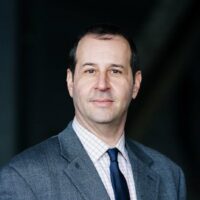
Abraham Newman
Georgetown University
Abraham L Newman is a professor and John Powers Chair in International Business Diplomacy at Georgetown University and serves as the Director of the BMW Center for German and European Studies. Professor Newman received his BA in International Relations from Stanford University and his PhD in political science from the University of California, Berkeley.
His research focuses on the ways in which economic interdependence and globalization have transformed international politics. Along with Henry Farrell, he coined the term weaponized interdependence, which explains how the networks of the global economy (information, finance, production) are used by states to target their enemies. Together with Stacie Goddard, he developed the concept of neo-royalism to understand a world order driven not by national interests but by those of personalist leaders and their insider elite clique.
He is the co-author of Underground Empire: How America Weaponized the World Economy (Holt/Penguin 2023), which received the Council on Foreign Relations Arthur Ross Bronze Medal and was named one of Foreign Affairs’ best Books of the Year; Of Privacy and Power: the Transatlantic Struggle over Freedom and Security (Princeton University Press 2019), co-author of Voluntary Disruptions: International Soft Law, Finance, and Power (Oxford University Press: 2018), author of Protectors of Privacy: Regulating Personal Data in the Global Economy (Cornell University Press: 2008) and co-editor of How Revolutionary was the Digital Revolution: National Responses, Market Transitions, and Global Technologies (Stanford University Press: 2006). His work has appeared in a range of journals including Comparative Political Studies, International Organization, International Security, Nature, Science, and World Politics. In 2022-2023, he received the Berlin Prize.
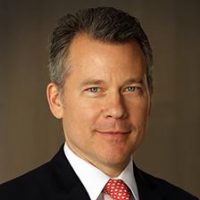
Jeff Rathke
President of AGI
Jeffrey Rathke is the President of the American-German Institute in Washington, DC.
Prior to joining AGI, Jeff was a senior fellow and deputy director of the Europe Program at CSIS, where his work focused on transatlantic relations and U.S. security and defense policy. Jeff joined CSIS in 2015 from the State Department, after a 24-year career as a Foreign Service Officer, dedicated primarily to U.S. relations with Europe. He was director of the State Department Press Office from 2014 to 2015, briefing the State Department press corps and managing the Department's engagement with U.S. print and electronic media. Jeff led the political section of the U.S. Embassy in Kuala Lumpur from 2011 to 2014. Prior to that, he was deputy chief of staff to the NATO Secretary General in Brussels. He also served in Berlin as minister-counselor for political affairs (2006–2009), his second tour of duty in Germany. His Washington assignments have included deputy director of the Office of European Security and Political Affairs and duty officer in the White House Situation Room and State Department Operations Center.
Mr. Rathke was a Weinberg Fellow at Princeton University (2003–2004), winning the Master’s in Public Policy Prize. He also served at U.S. Embassies in Dublin, Moscow, and Riga, which he helped open after the collapse of the Soviet Union. Mr. Rathke has been awarded national honors by Estonia, Latvia, and Lithuania, as well as several State Department awards. He holds an MPP degree from Princeton University and BA and BS degrees from Cornell University. He speaks German, Russian, and Latvian.
__

Leonard Schütte
Harvard Kennedy School
Leonard Schuette is an International Security Program Fellow at the Belfer Center for Science and International Affairs, Harvard Kennedy School. His work at the intersection of academia and policy focuses on European defense, transatlantic relations, and the crisis of multilateralism.
Previously, he was a senior researcher at the Munich Security Conference, a DAAD Fellow at the American-German Institute, a visiting researcher at the University of Oxford, and an O’Donnell Fellow at the Centre for European Reform in London.
Leonard has co-edited recent Munich Security Reports and co-authored The Survival of International Organisations (OUP). He has also published various policy briefs and academic articles in journals such as International Affairs and the Journal of European Public Policy. He also regularly provides commentaries for newspapers and briefings for decision-makers.
Leonard holds a PhD from Maastricht University, an MPhil from Cambridge University, and an MA from the University of St Andrews.
During his fellowship at AGI in 2024, Dr. Schütte built on previous research to develop a typology of rebalancing options for the transatlantic relationship, with a focus on NATO and Ukraine policy. Whichever way the U.S. elections go, the next U.S. administration will likely shift at least some resources and attention away from Europe, given the multiple parallel threats to the United States, ballooning public debt, and an underperforming defense industrial base. Rebalancing can take many forms, however. Between the extreme ends of the spectrum—with a formal U.S. withdrawal from NATO and abandonment of Ukraine on the one and the status quo on the other end—there are various shades, each with different policy implications. Based on interviews with (former) officials and experts, this project spelled out the various scenarios, which in turn can serve to inform European policymaking.
The United States has exploited strategic networks and dependencies to its advantage in foreign policy. As the international system has transformed, more countries seek to play at the game of “weaponized interdependence.” Abe Newman and Leonard Schütte join this episode of The Zeitgeist to discuss the convergence of economic influence and national security policy internationally and how the United States’ allies, particularly in Europe, have struggled to react to this new landscape.
Weaponized Interdependence: How Global Economic Networks Shape State Coercion
Underground Empire: How America Weaponized the World Economy
Host
Jeff Rathke, President, AGI
Guests
Abraham Newman , Professor and John Powers Chair in International Business Diplomacy; Director, BMW Center for German and European Studies, Georgetown University
Leonard Schütte, International Security Program Fellow, Belfer Center for Science and International Affairs, Harvard Kennedy School