
Episode 142: The AfD and the 2026 State Elections
Eric Langenbacher
Senior Fellow; Director, Society, Culture & Politics Program
Dr. Eric Langenbacher is a Senior Fellow and Director of the Society, Culture & Politics Program at AGI.
Dr. Langenbacher studied in Canada before completing his PhD in Georgetown University’s Government Department in 2002. His research interests include collective memory, political culture, and electoral politics in Germany and Europe. Recent publications include Comparative Politics: Mapping Institutions, Power, and Legitimacy (2025), Shifting Paradigms in Contemporary German Politics and Policy (edited volume, 2024), The German Polity, 12th ed. (2021), and Twilight of the Merkel Era: Power and Politics in Germany after the 2017 Bundestag Election (edited volume, 2019).
Dr. Langenbacher remains affiliated with Georgetown University as Teaching Professor and Director of the Honors Program in the Department of Government, as well as the Director of the Master in European Studies Program in the School of Foreign Service. He has also taught at George Washington University, Washington College, The University of Navarre, and the Universidad Nacional de General San Martin in Buenos Aires, Argentina, and has given talks across the world. He was selected Faculty Member of the Year by the School of Foreign Service in 2009 and was awarded a Fulbright grant in 1999-2000 and the Hopper Memorial Fellowship at Georgetown in 2000-2001. Since 2005, he has also been Managing Editor of German Politics and Society, which is housed in Georgetown’s BMW Center for German and European Studies. Dr. Langenbacher has also planned and run dozens of short programs for groups from abroad, as well as for the U.S. Departments of State and Defense on a variety of topics pertaining to American and comparative politics, business, culture, and public policy.
Jeff Rathke
President of AGI
Jeffrey Rathke is the President of the American-German Institute in Washington, DC.
Prior to joining AGI, Jeff was a senior fellow and deputy director of the Europe Program at CSIS, where his work focused on transatlantic relations and U.S. security and defense policy. Jeff joined CSIS in 2015 from the State Department, after a 24-year career as a Foreign Service Officer, dedicated primarily to U.S. relations with Europe. He was director of the State Department Press Office from 2014 to 2015, briefing the State Department press corps and managing the Department's engagement with U.S. print and electronic media. Jeff led the political section of the U.S. Embassy in Kuala Lumpur from 2011 to 2014. Prior to that, he was deputy chief of staff to the NATO Secretary General in Brussels. He also served in Berlin as minister-counselor for political affairs (2006–2009), his second tour of duty in Germany. His Washington assignments have included deputy director of the Office of European Security and Political Affairs and duty officer in the White House Situation Room and State Department Operations Center.
Mr. Rathke was a Weinberg Fellow at Princeton University (2003–2004), winning the Master’s in Public Policy Prize. He also served at U.S. Embassies in Dublin, Moscow, and Riga, which he helped open after the collapse of the Soviet Union. Mr. Rathke has been awarded national honors by Estonia, Latvia, and Lithuania, as well as several State Department awards. He holds an MPP degree from Princeton University and BA and BS degrees from Cornell University. He speaks German, Russian, and Latvian.
__
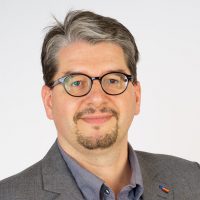
Wolfgang Muno
University of Rostock
Dr. Wolfgang Muno was a DAAD/AICGS Research Fellow in March and April 2017. He is Chair of Comparative Politics at the University of Rostock. Previously, he was a Senior Lecturer at the University of Mainz (habilitation 2015), Acting Professor of International Relations and Comparative Political Systems at University of Landau, Acting Professor of International Relations at Zeppelin University, Friedrichshafen, and Acting Professor for Political Science at Willy Brandt School. He was Visiting Scholar at University of Ottawa, Canada; at Shanghai University of Political Science and Law SHUPL, Shanghai, China; at Universidad Torcuato Di Tella, Buenos Aires, Argentina; at Teresa Lozano Long Institute of Latin American Studies, University of Texas at Austin, USA; and guest lecturer in India, Poland, Norway, Sweden, the UK, and Spain. In addition to his native German, Dr. Muno speaks English, French, and Spanish.
While at AICGS, Dr. Muno worked on a project entitled “Special relationship in flux: Brexit and the future of transatlantic relations.” In June 2016, a shockwave went through Europe: 52 percent of Britons voted in a referendum to leave the EU. The upcoming withdrawal of the United Kingdom (UK) from the European Union (EU) has since been heavily discussed in Europe. Many studies discuss potential effects of Brexit for the UK as well as for the EU; however, there is much less analysis of what Brexit might mean for wider international relations, especially for the United States and transatlantic relations. The starting point of an analysis of potential effects is a perceived “special relationship” between the UK and the U.S. The main focus of the project is on U.S. perceptions, fears or hopes, or frames; how the United States views Brexit; and on scenarios that are discussed by U.S. foreign policy makers regarding Brexit, and future U.S.-UK, U.S.-EU, and U.S.-German relations.
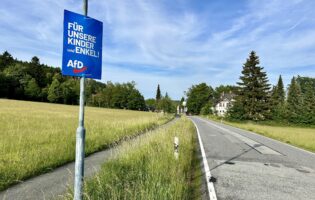
Five state elections will be held in Germany in 2026. The Alternative for Germany (AfD) enters this “super election year” in a strong position: it is the largest opposition party in the federal government, it continues to poll close to 25 percent nationally, and it has the potential to earn the most votes in the two eastern state elections in September. Dr. Wolfgang Muno joins this episode of The Zeitgeist to discuss what is contributing to the AfD’s popularity, if recent nepotism scandals could dissuade voters from the party, and how a potential AfD-led state government could impact Germany’s democracy.
Host
Jeff Rathke, President, AGI
Guests
Eric Langenbacher, AGI Senior Fellow; Director, Society, Culture & Politics Program
Wolfgang Muno, Chair of Comparative Politics, University of Rostock
Transcript
Jeff Rathke
It’s a great day to have our listeners back with us for a new episode of The Zeitgeist. We are speaking on March 10, 2026, and I’m glad to have my colleague Eric Langenbacher with me. Eric, good morning.
Eric Langenbacher
Good morning on this beautiful spring day.
Jeff Rathke
Yes, and we have with us a special guest from Germany, Dr. Wolfgang Muno. Wolfgang, good afternoon to you where you are.
Wolfgang Muno
Thank you for having me. It’s nice to be with you.
Jeff Rathke
Wolfgang Muno is the chair of comparative politics at the University of Rostock. He has been in the past a visiting fellow here at the Institute. And what we want to talk about today is the far-right AfD party in Germany, the electoral landscape that is emerging, and what this may tell us about what to expect in the months to come, 2026 being a big election year in Germany at the state level. As people who follow German politics may remember, every year, you have a few state elections. This year there are five. These form a sort of barometer of sentiment that gives you a little bit more insight than public opinion polling, perhaps. What we want to do is talk a little bit about a state election that happened on Sunday, March 8. That was in the south-west state of Baden-Württemberg, a west German state, and extract a few lessons from that and look ahead and see what this tells us about German politics. Of course, Wolfgang, at the University of Rostock in the sort of heartland of support for the far-right Alternative for Germany party, the AfD. They have been riding high in opinion polls since last year’s election. They did better than ever before in the Bundestag election in 2025; they got just over 20 percent. Now they are at 25 percent in most national polls. What do you think accounts for this increase in their support?
Wolfgang Muno
First of all, I would like to say that the rise of right-wing extremist, far-right, or right-wing populist parties is, of course, not a German phenomenon. It happens all over the world at the moment. We see the Rassemblement National in France, the Justice Party in Poland, Fidesz in Hungary, Vox and Schega in Spain and Portugal. We see the rise of MAGA in the United States. We have seen Bolsonarismo in Brazil, we see Modi in India. There are some similarities, but there are also some regional specifications.
In Germany, for a very long time, we have seen some right parties rising but then going down. In the 60s, the NPD (National Democratic Party) was in the state parliaments in Baden-Württemberg and Rhineland-Palatinate. In the 80s and 90s, we had the Republikaner, which was a far-right republican party. We’ve seen in the 2000s the NPD again in Mecklenburg-Vorpommern, in Saxony, DVU (German People’s Union) in Bremen and Saxony-Anhalt. We’ve seen them rising and going down. Political scientists talked of a normal pathology. So, there were some small right-wing parties. The new thing with the AfD is that the AfD achieved to unite all the right-wing people. Despite internal disputes, they still follow the party. They mobilized a lot of voters, especially non-voters, and they mobilized on very anti-democratic sentiments, I would really say, which we will maybe talk about a little bit more in detail. This led to a normalization of the far right in Germany, the AfD. It’s normal nowadays to say that I’m in favor of the AfD. It wasn’t so when I was young, no one would have said I vote for a right-wing extremist or a far-right party. That was kind of a taboo in Germany due to the history of especially western Germany. Nowadays, this has become normal. So, we see a normalization, which we also see in electoral results and in polls that the AfD is supported by a lot of people.
What’s interesting in the case of the AfD is that on the other side, we see a radicalization of the party. The party started in 2013. It was founded by three groups, basically, a group of liberal economists who were against Europeanization, against the euro especially, they wanted the Deutschmark back. The second group were former Christian Democrats who were disappointed by Angela Merkel and the more centrist way she changed the Christian Democrats, the CDU, in Germany. And the third group, at that time a minority group, were right-wing extremists who formerly had been in other right-wing groups. These groups formed the new party, the AfD, and the party radicalized more and more, the right-wing extremist wing had become more and more important and changed the programmatic profile from anti-EU, from a Eurosceptic party to a party who is nowadays extremely xenophobic. It’s still against the EU, but it’s against immigrants, and it wants to change democracy in a special way. It’s anti-plural, anti-liberal. So, that is the party nowadays, and they get the support of quite a big part of the German population.
Eric Langenbacher
If I can just jump in for a second, Wolfgang. Excellent overview of the evolution of the AfD, also in comparison to some of these other right-wing extremist parties. The big question then is, what’s different this time around? Why is it that the AfD has been able to do what you said, which is to unify all of these disparate right-wing groupings and to get the level of support that it’s had? We political scientists often talk about the demand side and the supply side. I think that there’s probably explanations on both of those sides here. But I’m interested to hear from you.
Wolfgang Muno
As I already mentioned, the supply side is the radicalization of the party. Especially the 2015 event of the so-called immigration crisis in Germany or the refugee crisis in Germany was a crucial turning point. The party changed towards a more radical, xenophobic, anti-immigrant position, and this was cheered, if we talk about the demand side, by many people within the population.
What has changed compared to former right-wing, far-right parties is that this party started more as a conservative right-wing party, just right of the CDU, and this made it possible for many people to vote for this party. Still, many people would not vote outright for a right-wing extremist party, but in the AfD, they never say, as the NPD did, “We want to abolish democracy. We are right-wing extremists.” The party says, “We want to improve democracy. We are conservative.” In fact, the party isn’t so conservative. It’s more right-wing extremist than conservative, and it does not want to improve the democracy as we know it, it wants to completely change democracy, but that is the image they have transported.
Then we had the refugee crisis, which was a trigger point for this party. We have in recent years more and more crises, and these crises raise the fears of many, many people who vote for the AfD. In political science, we have two basic explanations for voting for the AfD. One is the so-called socioeconomic hypothesis, the term like losers of globalization vote for right-wing populist parties. And the other explanation is a more political-cultural explanation saying that it’s a cultural backlash to modernization to immigration, which is on a very high level, especially in Europe, especially in Western Europe. And this has changed societies a lot. In fact, both factors play a role for people to vote for the AfD.
With some colleagues from Canada and France, I just did an analysis of the GLES data, the German Longitudinal Election Study, which is giving a lot of data in recent years. From a long-term perspective, we saw that we differentiated between stable voters for the AfD and switched voters for the AfD. And we saw that stable voters who have been voting for the AfD several times now in the elections, they are mainly motivated by cultural issues. They are against immigration, against women’s rights. They are against diversity. These people, the stable voters, are mainly motivated by these issues. And the switch voters, we would say the new voters, more perhaps we can talk about protest voters, they are motivated by socioeconomic issues. They are not really, as we can clearly see, for example, in Baden- Württemberg—and we should shortly talk about these elections—they are not really motivated by losers of globalization, as we would say, because in Germany there are hardly any real losers of globalization. But they fear losing their social status. They fear losing their jobs, and especially in Baden- Württemberg that has been very present. And they also fear that immigrants might compete in the job market, and that’s very problematic. So, perceptions matter a lot, and we talk of subjective relative deprivation for these people. They think they might lose, or they think they are losing against others. What’s especially problematic is we call it anticipative subjective relative deprivation, which means these people still are in a very good situation. Mostly people who have a nice income are workers. And in Baden- Württemberg, if you are a worker in the car industry, you might earn even more than university professors, I would say. But these people fear losing in the future. They might lose their job. All this crisis talk.
The AfD is a party that is hitting on these fears. It’s a party of fear: fear of the future; fear of changes; fear of losing; fear of immigration, which might change the society; fear of rising crimes, although we have a lower crime rate than the United States, for example, and less crime than twenty years ago. But they always talk about the fears and many, many people have these fears, and they are the potential of the AfD.
Jeff Rathke
Wolfgang, you mentioned the Baden-Württemberg result, where the AfD had its best-ever result in a Western German state. They won 18.8 percent of the vote, so just under 20 percent. That was about double their results five years earlier, the last state election. Do you see, how do you orient that result against this backdrop you’ve just described of the sources of AfD support and their growing popularity?
Wolfgang Muno
Baden-Württemberg is a very good example for exactly these explanations. It’s basically not one explanation, but it’s a mix of these different factors. In Baden-Württemberg, we see the powerhouse of Germany, as we used to call it. If it would be an independent state, it’s so rich, it would be among the 25 wealthiest nations on earth, so around about same level as the whole Belgium or something like that.
Jeff Rathke
You mean on a per capita basis?
Wolfgang Muno
GDP, gross domestic product, in Baden-Württemberg is roughly the same as the whole Belgium. So, people are quite wealthy in this area.
But there have been a lot of “crisis” talks in recent years. We had the energy crisis after the Ukraine war, we had inflation, and especially there’s a lot of fear of a crisis in the car industry in Germany. The whole world economy is changing, and the German car industry has become fat and a little bit less innovative than it used to be. There is a lot of talk about losing jobs. There are different estimations between 50,000 or 150,000 jobs might be lost in the next years in the car industry in Germany, and Baden-Württemberg is living off that. Bosch is there, Mercedes-Benz, Porsche, and other big car companies are in this area. So, a lot of people fear losing their very well-paid job in the next years. And this is one potential for the AfD. Then we have areas in Baden-Württemberg, which have always been very conservative. We have a lot of conservative fundamentalist Christians in this region, which is another source of the AfD.
The AfD made a campaign which was really riding on this fear of losing the job, saying that the government is not able to prevent this. And on the other hand, they also made a campaign of calling for your home and patriotic values. They are, for example, against abortion rights for women. And this is also something which is nice for conservative Christians in the area of Baden-Württemberg. These people come together, let’s say, as a potential for the AfD. And in the end, they almost, as you said, they almost received 20 percent of the votes, which is a very, very good result. What we see also in polls is that these people who are, who have fear and are not content with the government anymore, this leads to mistrust in democracy in the end. Just two weeks ago, we had the Deutschland Monitor, the Germany Monitor, giving a survey of all of Germany, and roughly half of the population is still satisfied with democracy, as it is in reality, as it works. This is what we see also in western states. We will later maybe talk a little bit more on east Germany, where there’s even less a proportion of the population satisfied with democracy. In Saxony-Anhalt, there’s about one-third of the population satisfied with democracy and in Mecklenburg-West Pomerania, less than one quarter, less than 25 percent of the people, are still satisfied with democracy as it works in Germany. These are people who tend to vote for the AfD. And we see it not only in east Germany, where these factors, the fear of losing, the fear of immigration, is just simply higher than in west Germany. But the structural factors are more or less the same.
Eric Langenbacher
We should pivot to talk a little bit more about eastern Germany. Yes, there is an election coming up in a couple of weeks in Rhineland-Palatinate, but I would assume that the profile of AfD voters is probably similar to that of Baden-Württemberg. But the state where you’re currently based, Mecklenburg-West Pomerania, is going to have elections in the fall, along with Berlin and Saxony-Anhalt. But maybe let’s talk about the situation in Mecklenburg-West Pomerania. If you look at the polls, the AfD has been riding high for quite some time. I think they are at about 37 percent, according to the most recent polling, followed by the SPD, which is, of course, the lead party in the current government there, but they’re down to 23 percent. Then you have the CDU at 13 percent, the Left at 11 percent, and then the smaller parties less than that. The FDP barely even registers at 2 percent—that’s another thing from Baden-Württemberg that they had a really bad night, the FDP, and now all the headlines are, “is the party finally done for good?” kind of thing. But maybe you could tell us about the dynamics in Mecklenburg-West Pomerania, and why the AfD is so strong there? And if you think that they will actually come in first or even win a majority of the seats?
Wolfgang Muno
Yeah, basically, just one sentence or two sentences more in Baden-Württemberg, the election was highly characterized by the race between the Greens and the Christian Democrats—who will become the next prime minister. And that’s very important. The state elections in Germany are highly personalized. So, and that will be the same in two weeks in Rhineland-Palatinate, where we’ll see a race between the Social Democrats and the Christian Democrats. This is at the expense of smaller parties. That’s why the FDP lost, the Left Party lost, and also the Social Democrats lost in Baden-Württemberg. The AfD is a story on its own, in this case.
In Mecklenburg-Western Pomerania, we will have a race between the prime minister, the incumbent, which is Manuela Schwesig from the Social Democrats, and she will run basically against the AfD, the party leading at the polls. In Mecklenburg-Western Pomerania, we have seen more or less the same as we’ve seen in Baden-Württemberg, but on a higher level. Mecklenburg-Western Pomerania is more or less one of the poorer states. Very little industry is there. Many, many people work in the tourism sector where there are very low wages. The average income in Mecklenburg-Western Pomerania is 80 percent of the German average income. So, the people are poorer. And if you have then an energy crisis after the war and the prices go up, people really fear they cannot pay the rent anymore, they cannot pay the prices for gas. Prices for food have been rising in last years in Germany, a little bit the same, I think, as the debate is in the United States with the food prices. People with a low income really fear losing even more. And in East Germany, we have the experience of the unification, which meant that there was no family which was not hit by unemployment. Many, many people lost their jobs during unification. All the state enterprises in East Germany were closed. There are a lot of people who have bad experiences of these changes, and that’s why they fear even more the possibility of losing again their social status. And in terms of immigration, we have definitely a higher level of xenophobia or fear of immigration because we have a history of non-experience with immigrants. The German Democrat Republic had fifty years of a closed state and a closed society. There was no immigration. There were some Soviet troops, but they were not allowed to have contact with the population there. There were some migrant workers organized by the state from Angola or from Vietnam. They worked in factories, but they were also not allowed to have contact with the population, so the East German population never had any contact with immigrants, let’s say, with foreigners, with migrants. This is one crucial hypothesis in social sciences, the contact hypothesis. The more contact you have, the less prejudice, the less fear you have. In East Germany, we really have a situation with historically no contact. And then we still have a very low level of migrants. The average level of people with migrant background in eastern Germany is around 5 percent. In Baden-Württemberg, for example, we have an average of 30 percent of people with migration background. So, this is the situation where the AfD, playing on all these fears, is even more successful in east Germany than in west Germany. And in Mecklenburg-Vorpommern, as well as in Saxony-Anhalt, they are leading the polls. Under certain circumstances—small parties don’t make it into the parliament over a 5 percent hurdle—it could be, if the AfD have a little bit more than 40 percent, they could even have the majority of seats. I think that’s not very likely that they will get more than 40 percent, but they it’s quite likely that they will become, in Saxony-Anhalt and in Mecklenburg-Vorpommern, the strongest party. What will happen then? Well, actually, nothing, or not much, will happen because they lack coalition partners in a parliamentary system, which we have on the national level as well as on the subnational level. You need coalition partners to have a majority, and no party wants to join a coalition with the with the AfD, except one party, which is the Bündnis Sahra Wagenknecht. You made a Zeitgeist podcast on this party recently.
Jeff Rathke
Thank you for noticing!
Wolfgang Muno
Yeah, I heard it. The leader of the party, Sahra Wagenknecht, very often repeats that she is open to cooperation with the AfD. So, what could happen in Mecklenburg-Vorpommern is that the AfD will be the strongest party, not having a majority, but the BSW could tolerate minority government or may even cooperate with the AfD. That is a possibility. More probable will be a three-party cooperation somehow between Social Democrats, the Left Party, and the Christian Democrats, which is in its own problematic because the Christian Democrats don’t want to cooperate with the Left Party. But we will see if they are doing that somehow in Turingia yet. And there might be also some kind of cooperation, not a formal coalition, but maybe kind of a cooperation between the three parties. Or possibility number three, we’ve seen in Baden-Württemberg that until the last day, there will be a lot of changes. And it’s especially about the personalization, who will become Prime Minister. And Manuela Schwesig, the prime minister in Mecklenburg-Western Pomerania, she is very well-known, and she is quite popular in the region. The Social Democrats could make more percentage points in the upcoming elections. We still have a few months to go in the campaign.
Eric Langenbacher
Wolfgang, if I can just jump in. There seems to be this tendency when I listen to pundits or even other political scientists to think that the AfD is this ever-strengthening, strong party that is such a danger to so much. But what about some kind of inner vulnerabilities? For instance, there have been quite a few scandals being reported about what the Germans would call Vetternwirtschaft, but we would call nepotism, with family members of AfD deputies being employed by other AfD members. This is pretty scandalous, especially because the AfD loves to talk about all the corruption in the mainstream parties, the democratic parties. Do you think that these nepotism scandals are going to have any effect on their level of support? And what about other inner tensions? I heard that in Mecklenburg-West Pomerania, there are different factions with the AfD based in different cities. How’s that going to affect things? Or will it?
Wolfgang Muno
Unfortunately, up to now, we have seen many, many scandals within the AfD and many tensions within the AfD. There have been some members of parliament and the European Parliament related to corruption or espionage for China and Russia, but this didn’t affect the vote for the AfD so far. With internal tensions, there is no party group in the state where there’s no infighting between different factions. But, and this is contrary to former far-right parties, this has not affected the vote for the AfD so far. I might expect that the current nepotism scandal in the AfD might affect a few people not to vote for the AfD because this is their motive, their theme, “We are not corrupt. We are against the corrupt elite.” So, this might have effects, some effects, but not to a large extent. What we have seen recently now and also in Baden-Württemberg is that more and more people vote for the AfD, first of all, because they are convinced of the party. They are not protest voters anymore. More than half of the voters clearly said in Baden-Wurtenberg, “we think that this is a good party and they have a good program.” This is one point, and the other point is what we have seen also in Baden-Württemberg in the election is they had a very weak candidate. He was not even on the list, Marcus Frohnmaier. In the end of the campaign, he was in the United States and not in Baden-Württemberg, but still the AfD received the votes. All the infighting might affect a little bit but not substantially.
We have to keep in mind that this is a party who has ousted several party leaders in the last years. They have ousted three party leaders in a row, more or less. Bernd Lucke, one of the founders, Frauke Petry, and Jörg Meuthen has left the party because of the radicalization. This would harm any party in Germany so far, but not the AfD. This is a new thing, which for scientists also, why doesn’t it affect people? Most of the sympathizers, supporters of the AfD, they simply do not believe what the media tells them. They believe they live in their own bubble, we would say social media bubble, media bubble, and believe the explanations of the AfD. And the most problematic thing is, this is legal in Germany, what they are doing. There’s a debate now of changing the law for parliamentarians, not to pay, let’s say, relatives from other parliamentarians. And this is the cross-networking payments, what they did. This has to change, and then we will see what will happen to the AfD. And one thing which in the end maybe which was also good for the AfD and maybe bad for democracy, that a court recently decided that the AfD should not be called by the Agency for the Protection of the Constitution as an outstanding right-wing extremist party. This may counterbalance the effect of the nepotism that some people say, if this party is not right-wing extremist, I can vote for it. And others might say, if this is so corrupt, this party, then I won’t vote for the party. So far, this is balancing.
Jeff Rathke
Yeah. Wolfgang, this has been a great conversation, and I can’t resist the temptation to ask one last question because you highlighted two things that I thought were quite important. First, that the AfD is unlikely to win an absolute majority in Mecklenburg or in Saxony-Anhalt. But there is the possibility of a coalition with the Sahra Wagenknecht party, BSW. What would it mean if you had a minister-president, a state governor, from the AfD? In what ways would this disrupt German politics as a whole, or would it not?
Wolfgang Muno
I would say it would not. On the national level, there would be limited influence because the government would have only three votes, or one state, Mecklenburg or Saxony-Anhalt, they would have three votes out of sixty-nine in the Bundesrat, in the second chamber. So, this is very limited. They couldn’t block anything and they could try to initiate legislation, but they wouldn’t find majorities. But it would have a big impact, of course, in the state. The state competences are justice, so they could nominate judges. It’s police. They could change the police. They could nominate police chiefs from what they would want to. And it’s media. They could try to get out of the public media system. But most importantly, from my perspective, education is competence of the states. They could change the schools and also the universities, basically, to a certain extent. But especially in the school, they could change the teaching system. They could change what students would be taught, especially in history, in social studies, and in other very in other areas which might have an impact then in upcoming years. If the younger generation would grow up in a state where a government of AfD would tell them that the Nazi government was not so bad, it was just a short episode and let’s forget about Jews and immigrants. Already said in Saxony-Anhalt, the head, Ulrich Siegmund said, we want to make this region as unattractive as possible for immigrants, which would influence also the economic development because without immigrants, the German economy wouldn’t run anymore. There wouldn’t be any people in hospitals and in other areas to work for. And this would have a strong impact on the subnational, on the state level, but a very limited impact on the national level. Unless there would be more governments of the AfD, then of course they could influence the national level.
Jeff Rathke
Right. Okay. Well, we will put a bookmark there because I’m sure we will come back to this topic as we look ahead to the elections in September in Mecklenburg and in Saxony-Anhalt. But let’s pause there. Wolfgang, thank you for sharing these really helpful insights into the dynamics around the AfD, not only in the west, but also in the east. And thanks for being with us, and we look forward to coming back to you sometime soon to talk further.
Wolfgang Muno
Of course. It’s been a pleasure and thank you for having me. And I would love to be again with you.
Jeff Rathke
For all of our listeners, I would also refer you to our project, which we call Understanding the AfD. You can find that on our website with a whole compilation of all of the research and events and discussions that AGI has organized around the support for the AfD, trying to understand its sources and its trajectory. So, and with that, we look forward to having all of you listeners with us again on the next episode of The Zeitgeist.