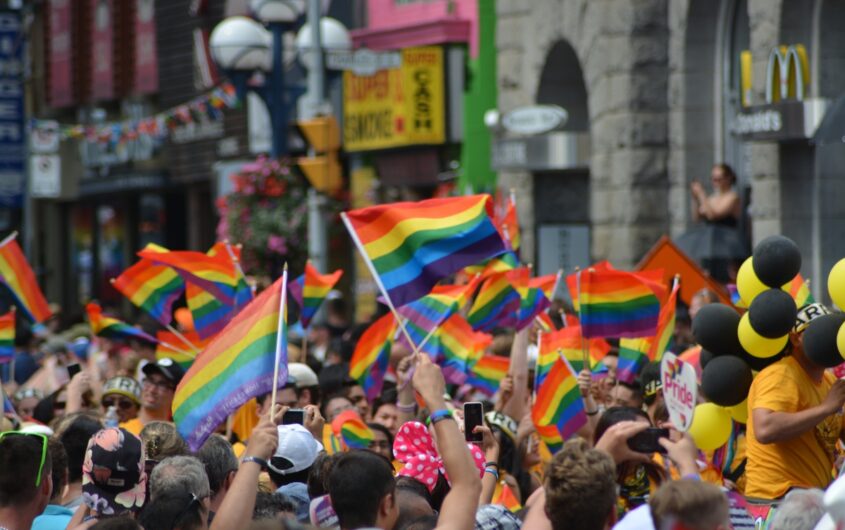
Public Domain photo via Rawpixel
Building LGBTQ+ Communities in Germany and the United States: Past, Present, and Future
Jack Fornasiero
Program Associate
Jack Fornasiero is the Program Associate at AGI. In his role, he develops and implements grant-funded programs, strategic initiatives, conferences, symposia, and exchanges that strengthen U.S.-German relations. Since joining AGI, he has co-led a multi-year exchange program on LGBTQ+ issues, organized high-profile public events featuring leading transatlantic policymakers and experts, supported AGI’s activities at the Munich Security Conference, and contributed to AGI research and analysis. He oversees AGI’s internship program, mentoring and supervising emerging professionals.
Before joining AGI, Mr. Fornasiero served as a legislative intern in the offices of Senator Kirsten Gillibrand and Congresswoman Susie Lee. Additionally, he completed an Executive Office and Communications Fellowship with Meridian International Center, where he supported cultural exchange programs, diplomatic leadership engagement, and internal communications.
Mr. Fornasiero received a Bachelor of Arts in Political Science and German Studies from Wayne State University with university and departmental honors. He spent his third undergraduate year at Ludwig Maximilian University of Munich through Wayne State University’s Junior Year in Munich program. In addition to his studies in political science, German language, and literature, he has completed coursework in Italian language and European history.
__
Rebecca Bohn
Halle Foundation/AGI Intern
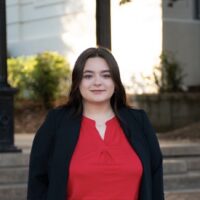
Rebecca Bohn is a Summer 2026 Halle Foundation Intern at the American-German Institute and a fourth-year undergraduate student in the School of Public and International Affairs at the University of Georgia. Majoring in Political Science and International Affairs with a minor in German, Rebecca has developed an interest in the unique transnational relationship between the United States and Germany. Previously, she presented work on implementing German sustainability initiatives in the United States at the Young Economic Summit (YES!) in Hamburg in 2022. During summer 2025, she studied sustainable urban infrastructure and the German language at the Goethe-Institut in Freiburg before traveling to Munich to immerse herself in German language and culture. Rebecca’s research interests include Germany's role in securing sustainable energy sources, the relationship between far-right German parties and vaccine hesitancy, German migration policy, and Germany’s role in European security policy.
Zara Khan
Halle Foundation/AGI Intern
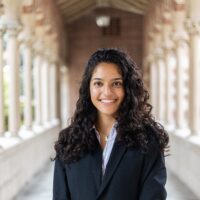
Zara Khan is a Summer 2026 Halle Foundation intern and a rising third-year at the University of Southern California, where she studies International Relations and Global Economics with a minor in Finance. At USC, she serves as communications director and programming lead for the Global Policy Institute, the University’s student-run foreign policy think tank. Prior to university, Zara lived, studied, and worked in Vienna and Lunz am See, learning about Austria’s history, politics, and regional dialects. Zara’s research interests include election dynamics pertaining to the rise of Alternative for Germany (AfD) and the evolving relationship between other political parties; the changing nature of Germany’s economic and fiscal priorities, and the evolving role of private markets in international relations more broadly.
A Three-Year AGI Project – Final Conference Summary
The American-German Institute held a final conference in Washington, DC, for the three-year project, “Building LGBTQ+ Communities in Germany and the United States: Past, Present, and Future,” on Wednesday, June 3, 2026. This conference brought together representatives from the three years of the project to present their experiences, offer reflections and policy recommendations, and engage with transatlantic policy experts. These reflections looked back on the rich experiences from six study tours on both sides of the Atlantic and participants’ contributions through articles, podcasts, and story maps from each year.
Year 1 – Orlando and Miami Beach, Florida, and Cologne, North Rhine-Westphalia
Orlando and Cologne are considered large LGBTQ+ hubs, with consistently large festivals and vocal LGBTQ+ populations. They represent non-capital cities that have been historically significant for the LGBTQ+ community and attract high numbers of LGBTQ+ tourists yearly. They also have sizable LGBTQ+ local populations that receive services funded through public and private resources. In the case of Orlando and Miami Beach, they comparatively represent progressive islands at odds with an increasingly hostile state government that has made access to services challenging for queer people.
Communities in Florida have experienced some of the most significant backlash against LGBTQ+ equality and affirmation in recent years. Among the many rollbacks of LGBTQ+ rights led by the conservative state government are gag rules on LGBTQ+ topics in public schools, decreased or eliminated funding for healthcare services, bathroom bans for transgender individuals in public spaces, and criminalization of healthcare access for transgender youth. The cohort’s visit to “The Center” in Orlando served as a case study for shifting funding. In 2023, the Center received a mix of layered funding from federal, state, municipal, and corporate sources, which constituted a $2.7 million budget and four locations of operation. In 2026, all government funding was cut, decreasing its operating budget by $1 million and closing two locations.
As funding from private and public sponsors has diminished, the number of individuals served through The Center’s programming and the food bank has increased by 50 percent. Participants noted that these examples showcase a social and political shift, furthering the marginalization of LGBTQ+ populations and making services more difficult to obtain.
As of 2025, The Center’s community programming has also faced increased hate-motivated vandalism. Notably, threats from the Proud Boys, an American far-right, neo-fascist militant organization that promotes and engages in political violence, and vandalism of homophobic slurs and other hateful messages have increased in occurrence, making safe delivery of services to the community more challenging.
Since meeting with Member of the Bundestag Nyke Slawik, one of the first openly trans people elected to the German Bundestag, participants shared the impact of the Selbstbestimmungsgesetz, or the “Self-Determination Act,” which came into effect in 2024, replacing the previous Transsexual Act from 1980. This milestone act allowed trans, inter, and non-binary people to easily change their first name and legal gender marker. Revisiting this conversation in 2026 showed that over 20,000 people changed their legal gender in the first year alone, a major advancement for the LGBTQ+ population.
Much like in Florida, political and social turmoil have polarized LGBTQ+ rights in Germany. Criticism of the Selbstbestimmungsgesetz has taken hold among right-leaning political narratives, making many community members fearful of the fragility of this progress. Germany has also witnessed an increase in pride events, but queer visibility has been met with rising hostility, threats, and attacks against the community in both Germany and the United States, highlighting the common negative impact of the rise of far-right politics.
Across the rightward social and political shifts in both the United States and Germany, infrastructure and financial support can be withheld from the community if government stances and social opinion withdraw. Autonomy is a key factor in independence, resilience, and resistance to discriminatory conditions in society. Queer people often serve as a bellwether for the social welfare of marginalized communities and are in many cases the first to feel the impact of major societal shifts. Policymakers, non-profits, and advocates have found resilience in creating support structures and obtaining resources independent of public support to withstand changing political environments.
Year 2 – New York City, New York, and Munich, Bavaria
Cohort two participants traveled to New York City in fall 2024 and Munich, Bavaria, in spring 2025. The program unfolded during a period of significant political change: President Trump’s return to the White House in the United States and the formation of a conservative-led Grand Coalition in Germany. Against this backdrop, participants explored a central question: How can LGBTQ+ communities build resilient civic infrastructure and position LGBTQ+ establishments as the primary storytellers for the community?
Across both countries, site visits highlighted the importance of storytelling, media representation, and institutional partnerships in shaping public understanding of LGBTQ+ communities. Participants found that the ways communities tell their own stories—and the platforms available to amplify those stories—have profound implications for civic participation and long-term resilience.
A key point of comparison was the role of public media. Germany’s stronger public investment in media creates greater institutional continuity and visibility for marginalized communities, even though representation remains imperfect. Public broadcasting and cultural institutions provide more consistent opportunities for LGBTQ+ voices to be included in national conversations. The United States’ more fragmented media landscape, coupled with comparatively limited public funding, often leaves significant gaps in coverage, particularly in rural and politically conservative regions. These information gaps create opportunities for misinformation and extremist narratives to spread more easily.
Participants observed that in both countries, declining trust in traditional media has enabled the growth of alternative media ecosystems that position opinion-driven content over fact-based reporting. These platforms amplify culture war narratives surrounding LGBTQ+ issues, particularly transgender rights, by promoting misleading claims and stereotypes and portraying LGBTQ+ people as political threats rather than equal members of society. These narratives dehumanize LGBTQ+ individuals and limit opportunities for communities to represent themselves, contributing to greater polarization between urban and rural populations.
Social media has further intensified these challenges. Participants discussed how major platforms have relaxed some content moderation policies related to speech targeting marginalized groups, creating additional space for harassment, extremist rhetoric, and the rapid spread of false information. These developments underscore the importance of community-controlled communication channels that can provide accurate information and authentic representation.
Throughout the program, participants encountered organizations working to counter these trends by creating spaces where LGBTQ+ people can tell their own stories. Christopher Street Day organizations in Germany demonstrate how personal narratives about coming out, rainbow families, volunteerism, and community spaces can humanize LGBTQ+ experiences while strengthening civic engagement. Rather than responding solely to misinformation, these organizations proactively build understanding through storytelling and public visibility.
Participants also examined how libraries and archives function as essential civic infrastructure. A visit to Munich’s Library of Diversity, which serves the city’s public school system, illustrated how institutional spaces can provide LGBTQ+ youth with access to fiction, non-fiction, educational resources, and affirming representation. Beyond serving as repositories for storytelling and information-sharing, these institutions preserve community memory while creating safe and welcoming environments for future generations.
The importance of community spaces was explored through visits to the Stonewall National Monument and the Stonewall Inn in New York City. Participants reflected on how the Stonewall Inn evolved from a covert gathering place for LGBTQ+ people during a period of widespread discrimination into an internationally recognized symbol of equality and civic participation. Today, the site continues to serve not only as a historic landmark but also as active community infrastructure that affirms LGBTQ+ belonging in public life.
At the same time, Stonewall serves as a case study for long-term resilience that depends not only on access to community spaces but also on ownership. While organizations have successfully embedded themselves within broader civic institutions, many continue to lease rather than own the properties from which they operate. Community ownership of physical infrastructure offers greater financial stability, builds equity, strengthens organizational independence, and reduces vulnerability to economic or political uncertainty.
The program also underscored the fragility of progress. Participants discussed how symbolic victories can remain vulnerable to changing political priorities, citing recent challenges to LGBTQ+ representation, particularly for transgender people, at the Stonewall National Monument as an example of how public recognition can be contested even after decades of advancement.
Several policy priorities were identified to strengthen LGBTQ+ civic infrastructure. These included investing in community-owned spaces, diversifying funding sources for LGBTQ+ organizations, supporting archives and community memory initiatives, reducing disparities in investment between rural and urban communities, strengthening community-controlled media and storytelling infrastructure, and expanding transatlantic partnerships that enable organizations in both countries to exchange strategies and build long-term civic resilience. Together, these recommendations emphasize that durable equality depends not only on legal protections but also on the institutions, narratives, and community assets that enable LGBTQ+ communities to thrive across political cycles.
Year 3 – Washington, DC, and Berlin
The third year of the project examined how LGBTQ+ advocacy has entered a new stage in the United States and Germany. In Berlin, participants met with the Magnus Hirschfeld Foundation, named after the pioneering early twentieth century physician, sexologist, and LGBTQ+ advocate Magnus Hirschfeld. Participants learned about Berlin’s history with LGBTQ+ advocacy and the importance of preserving community history. Delving into the history of Berlin allowed participants to understand how public visibility of the queer community and memory work helped to shift acceptance. The group discussed the place of LGBTQ+ people in German society today, which has radically shifted in Germany since Magnus Hirschfeld’s time in the Weimar period. Participants in Germany also traveled to Leipzig and met with the City of Leipzig Gender Equality Unit. Operating since 2001, the board works to promote equal treatment of women and men in Leipzig. Major legislative backsliding has not yet been witnessed in German governing coalitions, yet the conditions in the United States highlight the fragility of progress in Germany as the far-right party Alternative for Germany (AfD) becomes more popular. Discussions with advocates and policymakers revealed how “Queer” politics are increasingly framed as a cultural conflict rather than a normal part of society. The rise of the AfD has also coincided with the visible contestation of public symbols, languages, and state funding for the LGBTQ+ community.
In Washington, DC, participants met with the Congressional Equality Caucus, which works as a resource for Members of Congress on LGBTQ+ issues at the federal level. Various local organizations, such as Whitman-Walker Institute, Human Rights Campaign (HRC), Gay Men’s Chorus of Washington, Out in National Security, and other advocates for the LGBTQ+ community, highlighted how advocacy has shifted from fighting for equal rights to protecting current institutions and laws in the face of the United States’ increasing political polarization. Participants also engaged with the LGBTQ+ Victory Institute, which aims to support and increase the number of openly LGBTQ+ elected officials at all levels of government. The exchange underscored the importance of openly cultivating and supporting LGBTQ+ elected officials. In DC, the group identified state-level rollbacks of LGBTQ+ protections as a critical issue in the United States and additional federal executive action that has impacted research, funding, and institutions.
Perspectives in Berlin, Leipzig, and Washington, DC contributed to the development of policy recommendations to address future challenges for the LGBTQ+ community. First, they clarified that governments must more firmly protect existing LGBTQ+ rights. In both the United States and Germany, this involves progressive parties operating as protective barriers against regressive legislation on LGBTQ+ rights. Recommendations also outline strategic adaptation in which litigation and behind-the-scenes administrative advocacy become central strategies. Finally, creating a new public narrative that includes counter-misinformation messaging, visible leadership that operates across institutions and communities, and a reduction in reliance on government funding for LGBTQ+ advocacy can position organizations to operate more sustainably. Overall, storytelling, court battles, legislation, and coalition work need to be defended with the same tools, adapted for a more politically polarized era.