
Catholic Responses to Recent Developments in Migration Policy in the United States and Germany
Speaker: Kathrin Ritzka, DAAD/AGI Research Fellow
Moderator: Eric Langenbacher, Senior Fellow and Director of the Society, Culture & Politics Program, AGI
In 2025, migration policy design in many Western countries has reached a turning point. Current policy tendencies include a focus on increased border enforcement and deportations, alongside a growing debate on the balance between national security, humanitarian responsibility, and the economic and demographic implications of migration.
The Catholic Church has historically played a pivotal role in advocating for migrants. Catholic social teaching is grounded in the conviction that every human person possesses inherent dignity and that social, political, and economic life should be ordered toward the common good, guided by principles such as solidarity, subsidiarity, and justice. However, stances within the Church have never been monolithic; while many Catholic leaders and institutions actively advocate for the protection and inclusion of migrants, other voices support policies that emphasize stricter immigration controls.
This webinar explores how Catholic actors in the United States and Germany respond to a shifting migration policy discourse. Drawing on the long and complex relationship between Catholicism and the nation-state, it highlights both historical continuities and contemporary transformations by examining how different Catholic voices across ideological and institutional lines mobilize theological arguments to justify their stances. The talk discusses the role of Catholic advocacy in shaping migration debates and sheds light on the broader intersection of religion and politics in democratic societies.
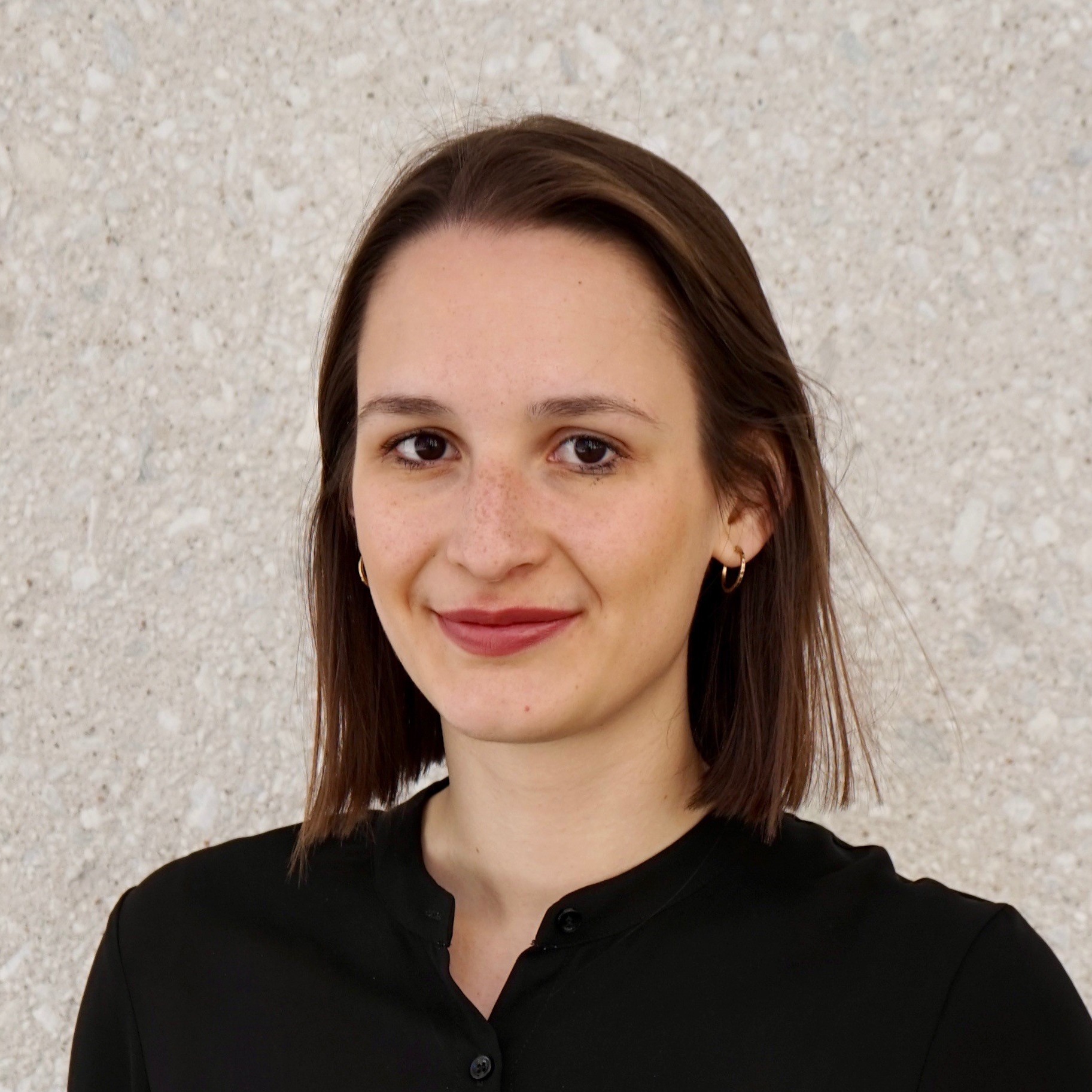 Kathrin Ritzka is a doctoral researcher and Research Associate in Catholic Theology at Humboldt University of Berlin and coordinator of the Center for Interreligious Theology and Religious Study at Humboldt University of Berlin. She holds a master’s degree in German literature from Humboldt University of Berlin, an MPhil in Theology, Religion, and Philosophy of Religion from the University of Cambridge and a bachelor’s degree with a double-major in Catholic Theology and German Literature.
Her research at AGI will examine how the Catholic Church in the United States and Germany has responded to migration policy debates between 2001 and 2025. Focusing on key turning points after 9/11, during the 2015 refugee crisis, and in the run-up to the 2024/25 elections, she investigates how Catholic leaders, institutions, and lay organizations have positioned themselves in relation to theological principles, political realities, and a shifting public discourse. On the basis of historical analysis and interviews with key actors her project compares national and transnational dynamics to understand how the Church balances universal theological commitments with local realities. In doing so, her research highlights the role of Catholic advocacy in shaping migration debates and sheds light on the broader intersection of religion and politics in democratic societies.
Ritzka is currently co-editing volumes on religion and modernity (Legitimität der Moderne: Reflexionen zwischen Dogmatik, Kirchenrecht und Geschichte, forthcoming 2026) and on language and theology as well as finishing her doctoral thesis on the notion of consolation in theology and contemporary literature.
Event Summary
This webinar examines the Roman Catholic Church’s responses and approaches to recent developments in migration policy, and measures the Catholic Church’s role in shaping public opinion on migration as a political issue in Germany and the United States. Drawing on voting trends, analysis of major political events in Germany and the United States, and actions by Church leadership, a comparative approach assesses the political influence and extent of Catholic Church’s stances on migration policies.
In the United States, there are about 62 million Roman Catholics—around 29 percent of whom are immigrants, and 14 percent are the children of immigrants. Catholics make up nearly half of the U.S. immigrant population and represent an expanding portion of the overall religious affiliation of Americans.
As of 2015, one in five Roman Catholics in Germany grew up speaking a different language other than German at home. As of 2024, 55 percent of the German population reported being non-religious or belonging to other affiliations (non-Christian). While the number of Catholics in Germany has been declining, Germany is also experiencing immigration primarily from countries where Islam is the dominant religion.
Catholic voting behaviors in U.S. and German elections also differ. In the United States, Catholics are seen as a “swing group,” their vote being split almost equally between the Democratic and the Republican Party. In the 2025 Federal German Election, around 39 percent of Catholics voted for the CDU/CSU, 18 percent for the AfD, and 15 percent for the SPD.
Since the return of President Trump to the White House, international and U.S. Catholic leadership have sharply criticized the anti-migration policies implemented by his administration. Many Church leaders expressed concern and objection to Presidential Executive Orders. On November 12, 2025, the United States Conference of Catholic Bishops (USCCB) released a “Special Message” expressing their concerns regarding the evolving situation impacting immigrants in the United States. This was the first “Special Message” delivered by the body in twelve years, condemning “vilification of migrants,” opposing family separation, and demanding immigration reform to address the situation. The Message passed with 216 for and 5 against (3 abstained) expressing unity in the body on their migration position.
In Germany, in response to the terrorist attacks in Solingen, Aschaffenburg, and Magdeburg during the 2025 German election cycle, the CDU introduced the Zustrombegrenzungsgesetz (Influx Limitation Act) in the Bundestag, outlining restricted migration and temporarily suspending family unification—it was ultimately rejected. Controversially, the CDU’s legislation relied on support from the far-right AfD for passage, calling into question the long-established so-called Brandmauer (firewall), in which centrist, democratic parties do not cooperate on legislation with the AfD or rely on the party to pass their initiatives.
In response, Evangelisches and Katholisches Büro (the contact and liaison points of the two main Churches in Germany with politics and society) spoke against this bill, stating that this legislative approach will not prevent terrorist attacks. Among other Catholic organizations, the Zentralkomitee der deutschen Katholiken (Central Committee of German Catholics, ZDK) also made a statement against the legislation. The statements caused a rift between some members of the CDU and the Catholic organizations.
In October 2025, Chancellor Friedrich Merz said that Germany should address the Stadtbild (city scape) by carrying out mass deportations. This statement was widely received as racist and divisive by the Church, political opposition, and the wider public.
In political discourse, the right has used religious teachings to often justify anti-immigration policies. Vice President JD Vance used Catholic teachings of Ordo Amoris (order of love) to justify the administration’s position, stating the church calls for you to love your family, then your neighbor, then community, fellow citizens, your country, and then perhaps others. This logic was criticized by Pope Francis, who stated, “Christian love is not a concentric expansion of interests that little by little extend to other persons and groups.”
How politically involved should the Catholic Church be in migration discussions? Catholic Social Teaching (CST) offers guidance on how Catholics should approach migration. It does not, however, contain a fixed canon of texts or principles. Some believe the Church should be using its platform to call for action on important issues, while others argue the Church should remain neutral in politics. Political figures have criticized the Church for interacting in society as an NGO, asserting that its role should focus on evangelism through preaching.
The Catholic Church’s involvement in refugee aid and politics globally has precedent. Catholic populations in Germany and the United States look to the Church for guidance on challenging political and social issues like migration. The Catholic Church has a history of helping migrants and refugees acclimate and receive aid in Germany and the United States. Many food banks and other educational services are administered by the Church in German and American communities. The strong role the Catholic Church plays on the local level, as well as on the national level, makes separating Church guidance on social issues and political opinions challenging for Catholics. The Pope’s role as a transnational character leading Catholics around the world showcases the Church’s influence in shaping public opinion.
There is variance in the way the Catholic Church is interacting with political issues, particularly around migration discussion, in the United States and Germany. Ongoing societal changes on both sides of the Atlantic are forcing the Catholic Church to adjust its role within the nation-state and reevaluate the Church’s relevance and impact in shaping social issues.
This event is supported by the DAAD with funds from the Federal Foreign Office.