

Episode 135: Reenergizing the German Economy
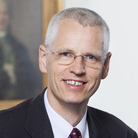
Holger Schmieding
Berenberg Bank
Dr Holger Schmieding is Chief Economist at Berenberg in London. Before joining Berenberg in October 2010, Holger worked as Chief Economist Europe at Merrill Lynch, Bank of America and Bank of America-Merrill Lynch in London. Having studied economics in Munich, London and Kiel, he holds a doctorate from the University of Kiel. Prior to this, he also worked as a journalist at Westfälische Nachrichten in Germany, as head of a research group on east-central Europe at the Kiel Institute of World Economics and as a desk economist at the International Monetary Fund in Washington, DC.

Jeff Rathke
President of AGI
Jeffrey Rathke is the President of the American-German Institute in Washington, DC.
Prior to joining AGI, Jeff was a senior fellow and deputy director of the Europe Program at CSIS, where his work focused on transatlantic relations and U.S. security and defense policy. Jeff joined CSIS in 2015 from the State Department, after a 24-year career as a Foreign Service Officer, dedicated primarily to U.S. relations with Europe. He was director of the State Department Press Office from 2014 to 2015, briefing the State Department press corps and managing the Department's engagement with U.S. print and electronic media. Jeff led the political section of the U.S. Embassy in Kuala Lumpur from 2011 to 2014. Prior to that, he was deputy chief of staff to the NATO Secretary General in Brussels. He also served in Berlin as minister-counselor for political affairs (2006–2009), his second tour of duty in Germany. His Washington assignments have included deputy director of the Office of European Security and Political Affairs and duty officer in the White House Situation Room and State Department Operations Center.
Mr. Rathke was a Weinberg Fellow at Princeton University (2003–2004), winning the Master’s in Public Policy Prize. He also served at U.S. Embassies in Dublin, Moscow, and Riga, which he helped open after the collapse of the Soviet Union. Mr. Rathke has been awarded national honors by Estonia, Latvia, and Lithuania, as well as several State Department awards. He holds an MPP degree from Princeton University and BA and BS degrees from Cornell University. He speaks German, Russian, and Latvian.
__

Peter S. Rashish
Vice President; Director, Geoeconomics Program
Peter S. Rashish, who counts over 30 years of experience counseling corporations, think tanks, foundations, and international organizations on transatlantic trade and economic strategy, is Vice President and Director of the Geoeconomics Program at AICGS. He also writes The Wider Atlantic blog.
Mr. Rashish has served as Vice President for Europe and Eurasia at the U.S. Chamber of Commerce, where he spearheaded the Chamber’s advocacy ahead of the launch of the Transatlantic Trade and Investment Partnership. Previously, Mr. Rashish was a Senior Advisor for Europe at McLarty Associates, Executive Vice President of the European Institute, and a staff member and consultant at the International Energy Agency, the World Bank, UN Trade and Development, the Atlantic Council, the Bertelsmann Foundation, and the German Marshall Fund.
Mr. Rashish has testified before the House Financial Services Subcommittee on International Monetary Policy and Trade and the House Foreign Affairs Subcommittee on Europe and Eurasia and has advised three U.S. presidential campaigns. He has been a featured speaker at the Munich Security Conference, the Aspen Ideas Festival, and the European Forum Alpbach and is a member of the Board of Directors of the Jean Monnet Institute in Paris and a Senior Advisor to the European Policy Centre in Brussels. His commentaries have been published in The New York Times, the Financial Times, The Wall Street Journal, Foreign Policy, and The National Interest, and he has appeared on PBS, CNBC, CNN, NPR, and the BBC.
He earned a BA from Harvard College and an MPhil in international relations from Oxford University. He speaks French, German, Italian, and Spanish.
The German economy is stagnating, and Chancellor Friedrich Merz has promised an autumn of reforms. But are the government’s policies enough to restore competitiveness? Berenberg Chief Economist Holger Schmieding joins this episode of The Zeitgeist to analyze the domestic, European, and international dynamics with which German economic policies must contend and what the government can do to ensure the country’s prosperity and security.
Host
Jeff Rathke, President, AGI
Guests
Peter Rashish, Vice President and Director, Geoeconomics Program, AGI
Dr. Holger Schmieding, Chief Economist, Berenberg
Transcript
Jeff Rathke
I want to welcome all of our listeners back for this episode of The Zeitgeist. We are speaking on November 10, 2025. I’m joined by Peter Rashish, Vice President of the American-German Institute. Hello, Peter.
Peter Rashish
Hello, Jeff.
Jeff Rathke
And we are delighted to have as our guest, as a return visitor to this podcast, Holger Schmieding. Hello, Holger.
Holger Schmieding
Hello, Jeff.
Jeff Rathke
Holger Schmieding is the chief economist of Berenberg, and we are going to talk today about the performance of the German economy, European dynamics, and other interesting things that relate to economic performance and economic policy. With that, we’ll get launched right into it. The basic question to start with, Holger, what’s your assessment of the state of the German economy? The growth rates have not appeared particularly impressive. What do you see happening on the German economy?
Holger Schmieding
Well, the German economy is stagnating. Abstracting from details, the German economy has been stagnating for about five years. More precisely, after all these pandemic downs and ups, we are back at the level of pre-pandemic economic activity. This prolonged stagnation is partly a response to external shocks, to Xi Jinping, Vladimir Putin, and Donald Trump. That is to fierce subsidized competition from China. That is to the spike in energy prices caused by Putin’s invasion of Ukraine. That is to the trade wars, the tariff chaos caused by Donald Trump. But it’s partly also a response to domestic structural problems. Germany had a golden decade in the previous decade. I had talked a lot about that. I had announced a golden decade in 2010, but the golden times were over in 2019. And the German problem is, to some extent, that in its ten years of outperformance, 2010 to 2019, it became complacent. Germany was like an athlete who had won the trophy, the gold medal, and thought he is much better than the competition and stopped exercising, whereas the competition exercised harder and got better. And now Germany has found out over recent years that the competition has improved and Germany has not. The domestic structural problems are excessive bureaucracy, wage costs, especially the payroll taxes paid by employers and employees, which are too high. And of course, an energy policy, which is not exactly rational.
Jeff Rathke
Okay, so I think that’s pretty clear and succinct. And that gets us started well. One of the reasons that the German voters put a new government in place or created the conditions for a new coalition in February of this year was dissatisfaction with the lackluster economic performance. It wasn’t the only reason but played a significant role. And Chancellor Friedrich Merz came into office promising to address these causes for the economic slowdown. Do you think the government’s policies, Holger, are the right ones? Are they showing signs of impact?
Holger Schmieding
By and large, the government’s policies are the right ones, but they do not go far enough. And at the moment, it’s far too early to say whether they are showing success. Before we go a bit more into it, it is worth remembering the following. Germany, with all its serious problems, is having its problems at a level of employment and in a fiscal situation that is much better than in most other countries. Our employment rate, despite recent problems in the labor market, is still among the best in the world, well above that of the United States. And our fiscal position, despite more spending now, is at least twice as good as that of the United States. And to some extent, that is part of the problem. That is, the sense of crisis, the sense that something significant needs to be done, is not as pervasive as it would be needed to get full public support, full political support for a more radical reform agenda. What the Merz government is doing: it has opened up fiscal space for more defense and investment spending. It is going toward some deregulation. It has already provided via taxes an incentive to invest more and to work more, for instance, by a tax-free allowance in income for all those who work beyond retirement age. Germany is going towards a less irrational energy policy, but much more is needed. Especially Germany needs to tackle the problem of an aging society more radically. That is, Germany in the end will need to curtail pension entitlements and reform the elderly care system. These are two systems which are largely funded out of payroll taxes, which are a burden on companies and employers, and to which, of course, companies, employers react by offering fewer high-quality jobs than they should.
As to the politics of it all, Germany is trying to do the right thing. The rise of the right-wing parties is partly a reaction to immigration, especially the uncontrolled immigration. The Merz government is going with harsher border controls, towards stemming the flow of uninvited immigrants, while at the same time encouraging people with qualifications from Nairobi, from New Delhi, from Latin America to come to Germany, to some extent, to take advantage of the fact that the United States is a bit less attractive now. But all these policies going in the right direction so far, it’s too early to say that they’re having an impact, and on some counts, especially as to the welfare, the pension reforms, are so far not going enough to really address the underlying German domestic problems.
Jeff Rathke
Well, we’re going to come back to the pace with which reforms are happening in a few minutes. But I wanted to pick up a couple of things that you’ve already put on the table, Holger. One, you’ve talked about the structural challenges at home. You’ve talked about the international environment; you also talked a little bit about the complacency that Germany has indulged in over recent years. Sometimes people look at this situation and they say, well, Germany with its low debt-to-GDP ratio now has the ability to spend a lot of money on defense. You mentioned that. Is an increase in defense spending, which will go up to 3.5 percent of GDP by 2029, is that going to produce an economic boost, leaving aside the security benefits? But is that going to be a way of reviving Germany’s manufacturing economy through defense production?
Holger Schmieding
First of all, we need to step up defense spending for our own sake, for the sake of Ukraine. We are doing it. And of course, the extra spending is a boost to demand. Initially, say 20 percent of the extra spending on equipment will go to the United States and South Korea because our companies cannot yet provide all the material, all the weapons that we need. But over time, almost the entire extra spend on equipment will go to Germany and Europe. It is a boost to demand and a boost that we, with our comparatively comfortable fiscal starting position, can afford. The key question is whether this will, over time, also have a positive impact on trend growth, on supply, or whether just having more tanks parked somewhere on the meadows, whether that is actually ultimately a drag.
And here it will all depend on whether Germany uses a significant part of the extra money for research and development. We are learning from Ukraine. It’s not the previous tanks that matter. It’s the ability to adjust immediately to battlefield conditions, to upgrade the drones. If Germany—what seems half likely, I would say—spends a significant part of the money for research and development, then we will likely see that this is dual use. Drones are dual use. Aerospace is dual use. And as in the United States, out of military spending on research and development, we may get positive civilian impact. But so far, the government isn’t quite sure yet what proportion exactly will go to research and development. So this is a hope rather than a clear forecast that in the end, this will also have significant civilian benefits.
Peter Rashish
Holger, let me pick up, if I may, on this issue of the government’s economic policies. They were framed around the idea of an autumn of reforms. Whereas Jeff mentioned, we’re talking on November 10, we’re right in the middle of the autumn. There have been some challenges for the chancellor and the government to move forward on this program, which include, as I think we’ve discussed a bit, some deregulation or what is often called in the EU context, simplification. What should we make of the fact that there have been some challenges getting this program on the rails, and to what degree is that because either some different policies are needed, or is it rather because of some political aspect to the actual nature of the current policies?
Holger Schmieding
Peter, the term autumn of reforms, that’s a very big term for what is actually happening. What we at the moment see mostly is that the government is point by point doing, implementing what it agreed on in the coalition agreement between the two parties, the center-right and the center-left, what they agreed on in April. We have discussions, you could say, at the margin about precise details of the new welfare policy, about precise details of the small-scale changes to the pension system. We have discussions about what precisely should go into the budget for 2026. But the big outlines for what’s being discussed now were more or less decided back in April. There is some discussion about the future pension reform steps that will be needed, which the government has said from the very beginning they will only tackle that next year, not this year.
On the negative side, what we are having is a public perception that this government is quarreling, bickering, even about the details of the main points that they already agreed on in April. And this bickering, this perception, is something that’s actually weighing on consumer and business confidence, and hence retarding spending. What we’re seeing at the moment is, the government is doing more or less what it’s promised with more noise than we should have. It’s not going beyond its agenda. But we already mentioned a few examples initially. It is implementing its agenda. The big challenge is to go for the serious reforms on which the parties had not yet agreed in April. These big challenges are ahead probably for next year.
Peter Rashish
Okay, so we need to wait and see for part of the program. Thank you.
Holger Schmieding
Yes, we need to wait and see for part of the program. And one big issue is really public investment is scheduled to rise. The German way of doing that is step by step by step. There’s a lot of money, but it will not be implemented immediately. We have our procedures. The key question now is whether in addition to the public money, there will be private money, private investment, private spending. And that depends partly on the deregulation, which we already mentioned, on keeping payroll taxes in check. And it will partly depend on simply confidence. Does the government exude the confidence: We know what we’re doing, it will be good, and you can trust us, invest.
Peter Rashish
Got it. Let me zoom out just for a moment. We are seeing increased discussion of a phenomenon that is often labeled the China Shock 2.0, which is a reference to the first China Shock that hit the basic manufacturing in the United States in the 2000s or so and into the 2010s. The idea now is that this second China Shock will impact more advanced manufacturing, for example, in automobiles in Germany or other sectors elsewhere in the EU. Do you share this idea that part of Germany’s challenge is this so-called China Shock 2.0? And if so, what can Germany do to either prevent or overcome such a shock?
Holger Schmieding
Peter, first of all, China Shock 2.0 is a pretty big word, but it goes in a direction which has a lot of substance. Yes, Germany is facing serious problems with partly subsidized Chinese high-tech competition. On the Chinese angle on that, in my view, China is hurting itself, wasting resources with its policies. It seems that China is directing, for political, for military reasons, its resources into selected high-tech sectors, probably to be on par with the United States in technological, in military terms. But we then have this weird divergence in China. On the one hand, for instance, factories where robots build electric vehicles that for mass electric vehicles are really good. But outside those factories, where they’re mostly robots, is high youth unemployment. That is, China as a middle-income country, by trying to be technologically at the cutting edge of the world is actually neglecting its own development. It’s neglecting providing jobs for its own people. But at the same time, of course, these subsidized, high-tech Chinese exports, these Chinese overcapacities, are hurting Germany especially, because when it comes to cars, machine tools, that is a direct competition for German strength.
What Germany needs to do: we don’t want to be really protectionist. We’re traditionally one of the big free traders of the world. But we’ve learned the very hard way from Putin, and now to some extent from China, that we have to think twice about preserving parts of our industry. That is, we need to define what we have to preserve, even at some cost to consumers and some cost to the public purse, what we need to preserve for national security reasons. We don’t want to be dependent on Chinese rare earth for our military, as a key example. We have to define where the government needs to intervene to make sure that we have reliable supply chains for the minimum that we need. And so we need interventions to keep or develop or nurture specific things that we need for these reasons. I’m very much against interventions just to preserve jobs, but to preserve our security, our supply chains, we need that.
The second big point is, we need to strengthen our adjustment flexibility. The German Mittelstand is world champion in many respects. It has lots of hidden champions. It is world-class when it comes to adjusting to serious external challenges. These small, medium-sized enterprises, often led by the owner, they are extremely good at finding and defining market niches. They adjust. The key question for the German economy is typically not whether the Mittelstand does adjust, it is adjusting, but whether the Mittelstand, in the process of adjusting, creates new jobs at home while shedding some old jobs, or whether the new jobs are created abroad.
And hence, we are back to the questions we’ve discussed before. What Germany needs is some deregulation. It needs a lid on payroll taxes. It needs to make Germany a place where the German Mittelstand feels comfortable to create the new jobs to replace the old jobs, which to some extent we are losing in competition to China.
Peter Rashish
But the assumption should be in Berlin that, despite what you said about Chinese policies, that it’s likely to continue on this track for a while.
Holger Schmieding
Yes, China looks set on its track for policies. We have to adjust to that. I’m confident that we will be able to adjust. The key question is, once again, not whether the German Mittelstand will get through it, but how many of the top jobs of the German Mittelstand will still be in the country. So, we have a lot of domestic work to do. We’ve done that before. We’ve come through previous shocks. We’ve had many instances where the German currency suddenly got overvalued over the decades. And a few years later, Germany was one of the top exporters of the world again, because we adjusted. We had the reforms of 2003-2005, which turned us from the sick man of Europe into the continent’s growth engine. We’ve done hard adjustments before, but we have to realize, despite still having a high employment rate, that we are in the process of a wrenching adjustment and that government better do more to ease the adjustment instead of trying to preserve things that we had, like full pension entitlements for everybody.
Peter Rashish
Holger, I can’t resist mentioning the most recent Nobel Prize for Economics that was awarded. Sometimes you look at the choice that’s made, and it seems historically interesting and certainly important for the field. But this time, I think it’s a little more relevant to the things we’re discussing, because it was awarded to three economists who were focused on the idea of creative destruction that was put forward by the late Austrian economist Joseph Schumpeter. That does strike me as at least one useful framing for thinking about the German economy. Do you believe that as part of this adjustment process, for example, that we just discussed because of the China shock, that more of a mentality of creative destruction would be helpful for policymakers or people in the private sector, that sort of more of an idea of getting rid of the old and making way for the new, for a more innovative economy, creating new kinds of sectors. How important is that for Germany over the next five or ten years, do you think?
Holger Schmieding
Peter, thank you very much for bringing that up. And you’ve almost answered the question yourself. I’m a great fan of the Schumpeterian concept of creative destruction. My late academic teacher, Herbert Giersch, in the 1980s, already taught us Schumpeter, creative destruction, that is much more relevant than almost all the other stuff we learn in economic theories about economic growth. It’s allowing the creative destruction to happen. And creation, unfortunately, almost always goes along with some destruction. You can’t avoid that. That’s part of the process. Germany indeed needs, you could say, a new culture of risk. We are living very comfortably, but living very comfortably, living still with some complacency is not what secures the future. A new culture of risk. Which means a bit, as we discussed already, we need subsidies, we need state interventions, but not for preserving jobs. We need state interventions, subsidies for preserving our national security. For making sure that we have the supplies, that we’re securing them to do with our industry what we need. But industry itself needs to do the real job of coming up with the innovations, with the new products. Germany still has the advantage, although it’s slightly dwindling, but it still has the key advantage that its labor force, especially in industry, is among the best in the world. The typical German industrial worker with its qualifications is typically well ahead of the industrial workers in most other countries in the world, with the potential exceptions of Japan and South Korea. We still have that strength, but we need this culture of risk. We need the innovations, and we need government to not be in the way that is as we already discussed. We need a government that focuses on research and development. That’s where you need public money. We don’t need a government that focuses on preserving pensions, especially at an age where many Germans, in a way for the first time in a long time, can actually look forward to having a significant inheritance from their parents, as we for quite a while fortunately no longer had high inflation or a war destroying assets. We, as a smaller example, need to allow cross-border banking mergers. We need to make more room for insurance companies, for pension funds to invest in equities. We need more government support for the startup culture, which often is, “government, get out of the way.” That is, let it happen first and regulate thereafter instead of regulating it to such an extent as to suppress it. A key example is what Germany ought to do at the EU level is to push for a significant reform of the European Union regulations on artificial intelligence. I know stuff may happen, but if you regulate it so much, then of course fewer mistakes might happen, but you will not reap the benefits of artificial intelligence. The German push for deregulation, for a new culture of risk, at especially the European and to some extent the domestic level, that’s what we really need over here. And that would help with the transformation of the economy. Within limits, the Merz government is going that way, but we really need to see the government following through on that. And that is a key political issue. Deregulation is something which you cannot give to the bureaucrats themselves. The top political level has to always tell the ones beneath them, the bureaucrats, the offices, abolish this, that, or that regulation because on their own, the bureaucrats who administer the regulations would not volunteer to end that regulation.
Jeff Rathke
Holger, you’ve touched upon the European dimension of Germany’s economic policy, which is important, and I’m glad you mentioned it, because it sometimes seems to be the missing aspect. You’ve talked about economic reforms that the government has begun to implement or that it will in the coming years have to take on. Do you think there is a missing European dimension to the Merz government’s economic policy, in particular, when you think about the interconnectedness of the German economy with the rest of Europe? You talked about banking. There have been a number of proposals made by Mario Draghi, by Enrico Letta, and these were widely praised but haven’t really had much effect yet. Is Germany forgetting about Europe?
Holger Schmieding
Germany is not forgetting about Europe. This government is actually focusing more on Europe, including especially the foreign policy aspects of Europe, than the previous government. That is clearly visible when it comes to policies towards Ukraine and Russia, where this German government is more determined to make more resources available for Ukraine, you could say, than the previous government. It is going clearly that way. But the German efforts could go much further. We could do more for deregulation and more especially in coming up with bargains for Europe. Europe is a give and take. Ultimately, Germany will probably have to agree that there will have to be some additional joint financing in Europe. For instance, that the support for Ukraine could come out of joint European bonds, Eurobonds, but that should then be a bargain. Germany saying, “okay, we are ready to move that way, but only if you, in France, in Italy, give way on some other issues.” So as part of a bargain, we can be flexible on money. The Germans could afford that, if you are flexible on some of the other things that we would like to get done, especially on deregulation, then, of course, that would work. It’s easy in Berlin to pontificate about deregulation. But when it comes to the nitty-gritty details, it’s sometimes the Germans who stand in the way of a cross-border banking merger. It’s sometimes the Germans who say, but our insolvency law is better than the French law. So, okay, Europe either adopt the German insolvencies law for a capital markets union so that we have the same insolvency law for corporates across the EU, or we’re not going to go for it. So a bit of German flexibility that even if we think our rules are better than the others, which actually they often are not, they may just be more detailed rather than better. So that once in a while we are ready to give a bit on details, to take a little risk in, okay, let’s take other countries’ rules and make them the common EU rules. A bit of German flexibility on those issues in return for other countries also showing flexibility, that would be more than welcome.
Energy policy is an interesting issue in Europe, but it actually is mostly a national issue. Electricity flows more or less freely across European borders. That’s not the issue. The question is at what price is electricity generated and distributed in the various countries. And that’s where Germany, with its, well, weird exit from nuclear, with its weirdly executed headlong rush for renewables, has created problems. The rush into new renewables is great. I like it. But it should only happen to the extent that the grid can take the extra energy when the sun is shining and the wind is blowing, instead of Germany having to sell it to France when we have the surplus at a price of 0. And the investment into renewables must come along with a huge investment into storage facilities so that when the sun is shining and the wind is blowing, we can store the surplus energy to release it when the weather conditions are worse. Germany is finally turning a bit into this direction, a bit belatedly. Energy, although it’s a kind of European market, often, even if it’s a European market, the homework often needs to be done at the national level rather than the European level.
Jeff Rathke
Well, Holger, I think that is the perfect place to wrap up our conversation today. You’ve taken us across the horizon of German national economic policy; you’ve connected it to the European level. You’ve sketched out a number of measures by which we can judge the progress of this government toward restoring competitiveness and providing the conditions across Europe that are going to be necessary for continued prosperity and defense of European sovereignty when we think about things like security, defense, and so forth. I want to thank you for being our guest once again on The Zeitgeist, and we’re always happy to have you back, and we look forward to our next discussion.
Holger Schmieding
Jeff, Peter, thank you for giving me the opportunity, the honor of being part of this Zeitgeist podcast. It’s a great pleasure.
Jeff Rathke
And we look forward to having all of our listeners with us on the next episode of The Zeitgeist. Thanks so much.