Transatlantic Trade Week 2026
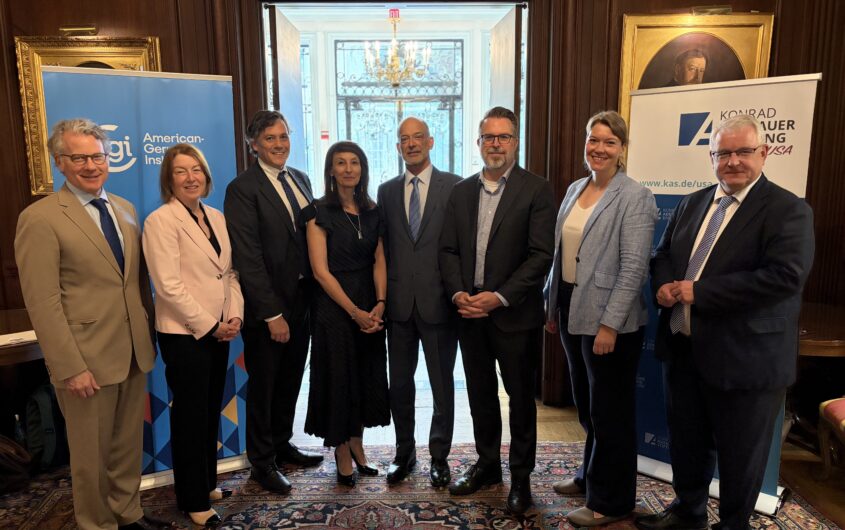
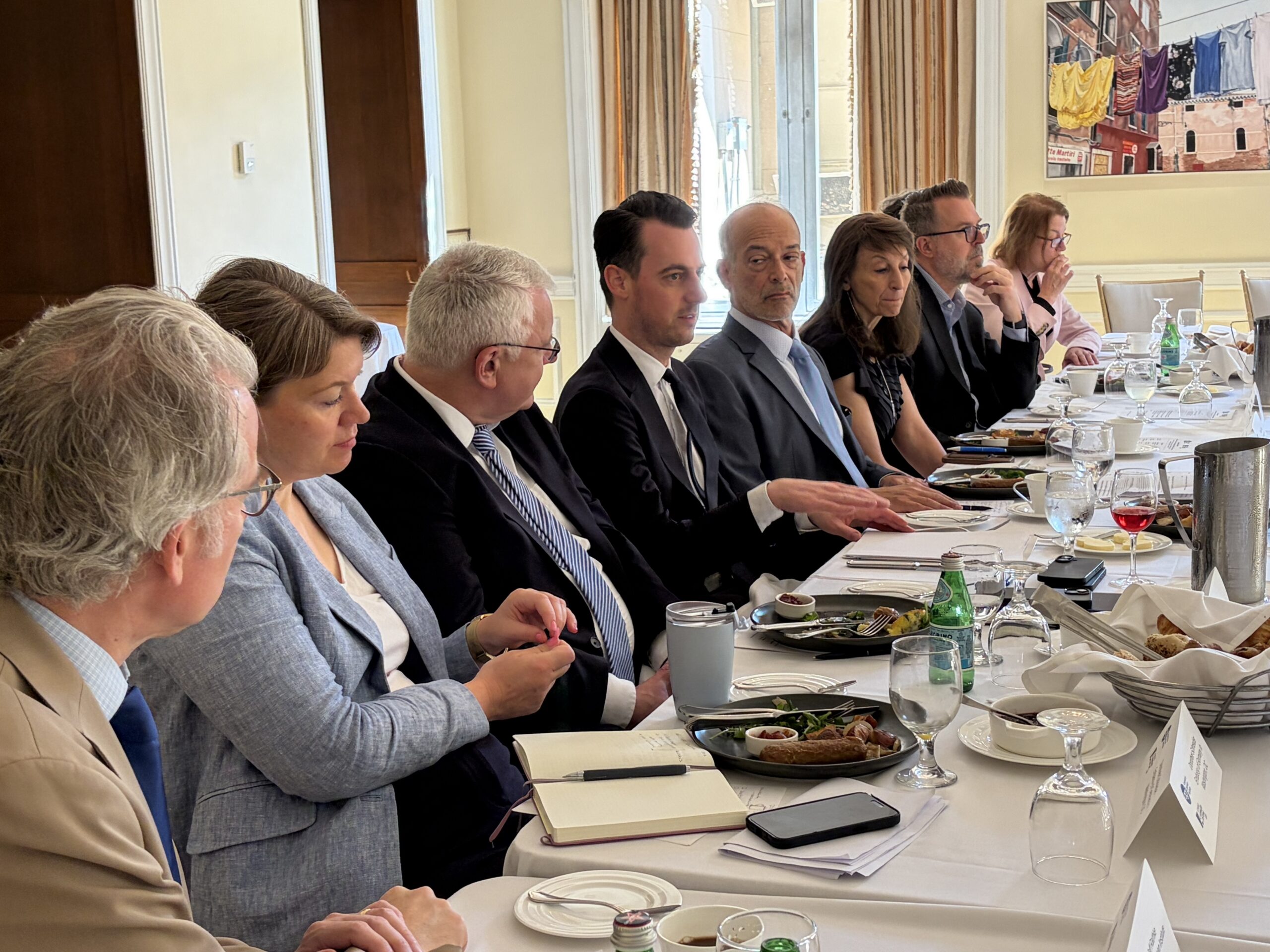
For the sixth consecutive year, the American-German Institute and the Konrad Adenauer Stiftung USA are jointly convening “Transatlantic Trade Week” in Washington, DC. This year’s event will take place as trade policy’s center of gravity continues to shift in both the United States and the European Union. Discussions will examine the balance between national sovereignty and interdependence in the transatlantic tech stack.
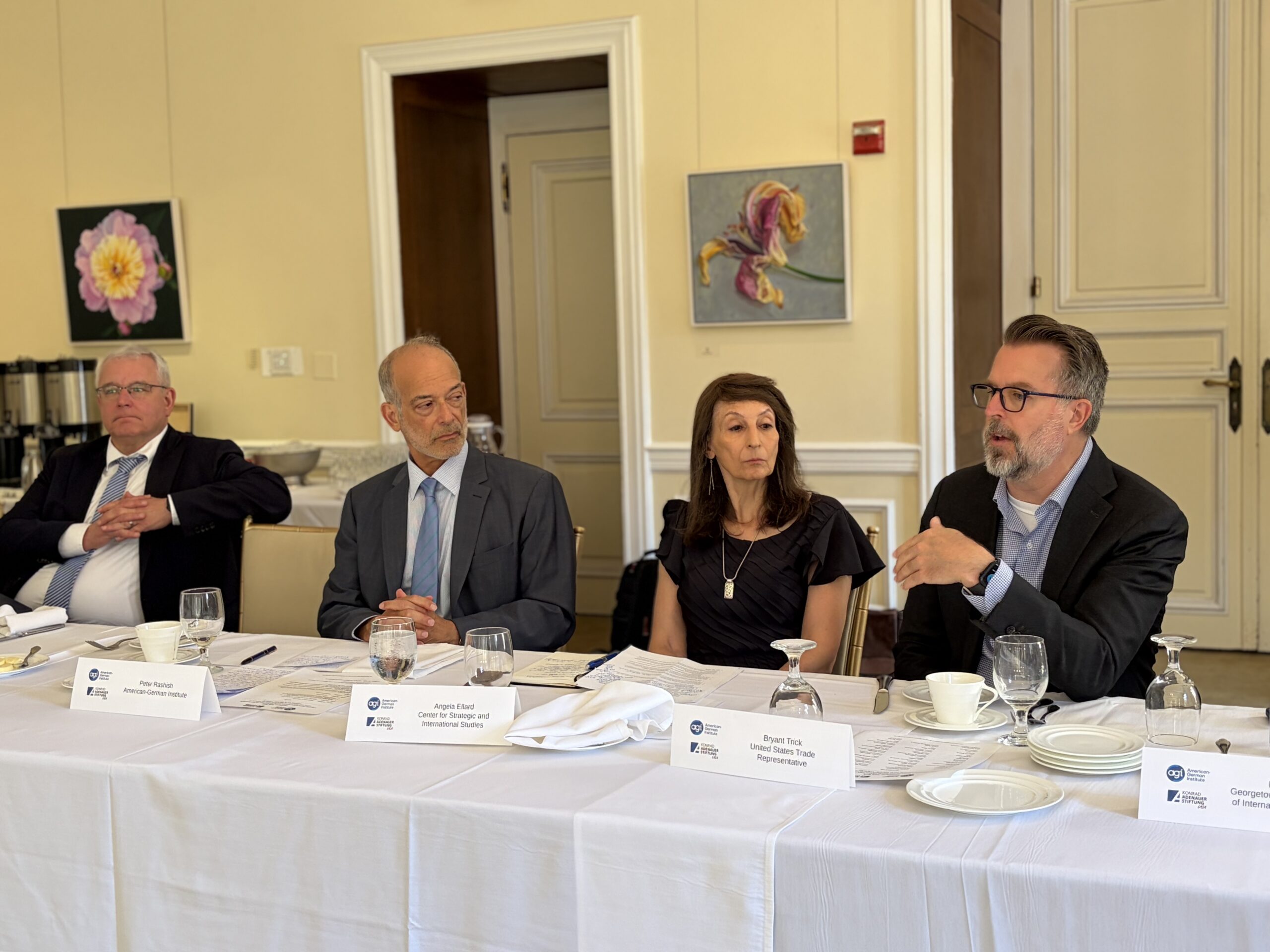
Session One – June 30
A Disrupted Trading System: Economic Security, Industrial Policy, and Tech Sovereignty
Welcome:
Hardy Ostry, Executive Director, Konrad Adenauer Stiftung USA
Jeff Rathke, President, AGI
Opening Remarks:
Thomas Engels, Head of Corporate Government Affairs, Aurubis
Panelists:
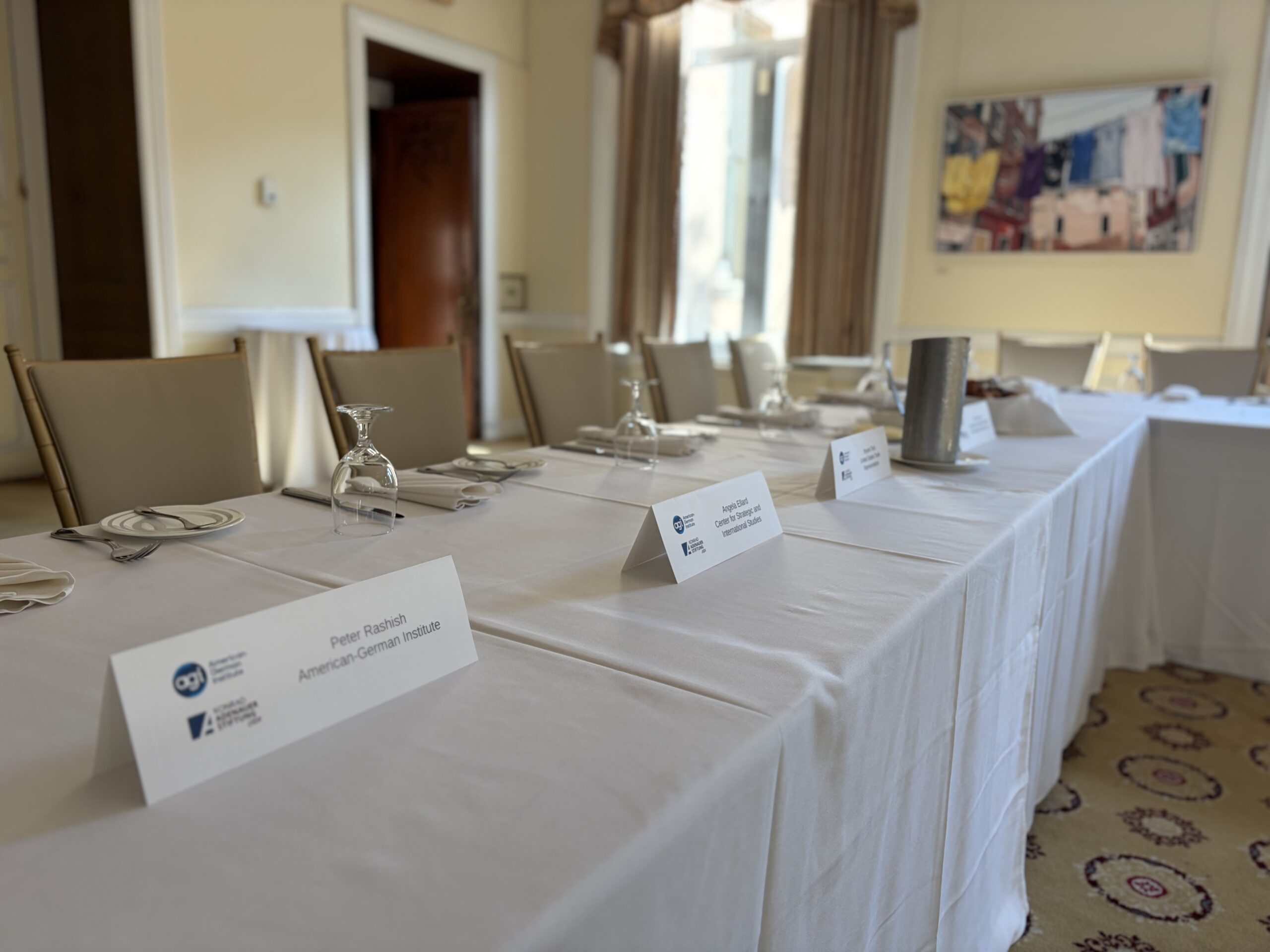
Angela Ellard, Senior Adviser, Center for Strategic and International Studies (CSIS)
Peter Harrell, Visiting Scholar, Georgetown University Institute of International Economic Law
Penny Naas, Senior Vice President, Innovation and Competitiveness, German Marshall Fund of the United States
Dorothee Schneider, Minister-Counselor and Head of the Economic and Trade Section, Embassy of Germany in Washington, DC
Bryant Trick, Assistant U.S. Trade Representative for Europe and the Middle East, Office of the United States Trade Representative
Moderator:
Peter Rashish, Vice President and Director of the Geoeconomics Program, American-German Institute (AGI)
Increasing competition and fragmentation in the global economy, due in large part to China’s state-dominated manufacturing power, are leading U.S. and European economies to focus more on their economic security: preventing international economic relationships from being leveraged to the detriment of their prosperity and global interests. Hand in hand with that concern is a new priority placed on industrial policy—including U.S. government stakes in companies in strategic sectors and the EU Industrial Accelerator Act—as well as the resilience of the tech ecosystem.



Session Two – July 1
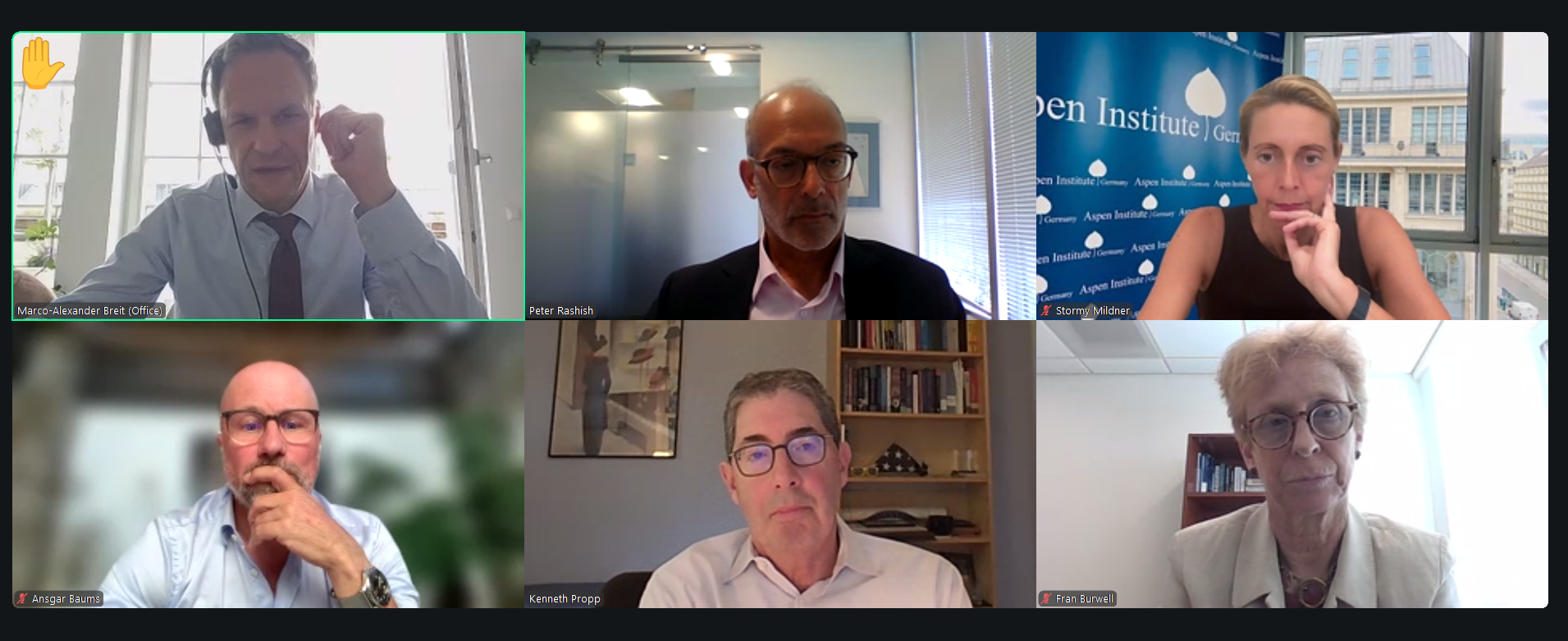
Transatlantic Technology and Trade: Sovereignty or Interdependence?
Welcome:
Hardy Ostry, Executive Director, Konrad Adenauer Stiftung USA
Jeff Rathke, President, AGI
Keynote Speaker:
Marco-Alexander Breit, Director-General, Digital Policy and Economic Affairs, German Ministry for Digital Transformation and Government Modernization
Panelists:
Ansgar Baums, General Manager International Government Affairs, Microsoft Germany and Austria
Fran Burwell, Managing Director and Head of Research, McLarty Associates; Distinguished Fellow, Atlantic Council
Stormy-Annika Mildner, Executive Director, Aspen Institute Germany
Kenneth Propp, Nonresident Senior Fellow, Atlantic Council; Adjunct Professor, European Union Law, Georgetown University Law Center
Moderator:
Peter Rashish, Vice President and Director of the Geoeconomics Program, AGI
While relations have stabilized somewhat since the Supreme Court struck down the Trump administration’s tariffs enacted through the International Emergency Economic Powers Act, economic tensions between the United States and the European Union remain. In technology policy, these include how the EU’s Digital Services Act, Digital Markets Act, and AI Act will affect leading U.S. tech firms, as well as broader questions about differing approaches to technology governance between Washington and Brussels.
At the same time, there are signs that the United States and the EU can to compartmentalize their relations. Cooperative steps such as the Memorandum of Understanding and Action Plan for Critical Minerals Supply Chains Resilience and the ongoing U.S. Pax Silica initiative may allow for both sides to reach agreement. In addition, there appears to be greater awareness of the common interests that characterize the transatlantic tech ecosystem, including at the recent G7 summit in France. This awareness may provide space for greater transatlantic cooperation between the Trump administration and the EU, especially in artificial intelligence.
This event is presented in partnership with the Konrad Adenauer Stiftung USA.