
Public Domain photo via Rawpixel
Safe But Not Secure

Mona Maijs
LiteraturRaumDortmundRuhr
Mona Maijs is a queer Dortmund-based poet and author, writing poems, short stories, and slam text. Her content, which she performs live and posts on her Instagram channel “rosa.schichten,” revolves around her life with her wife and two sons in a society that struggles with inequities among diverse communities. Mona is an advocate for the equality of same-sex parents, who remain legally disadvantaged in Germany. She raises her sons without parental rights, even though both are her biological children.
Since moving from Munich to Dortmund in 2018, Mona has been active at literature association LiteraturRaumDortmundRuhr. She began running the project "Das Wunschkabinett" in 2025, which focuses on political utopias featuring a podcast hosted by Mona, an anthology, and several readings.
Preston James Ross
Prince George’s County Council Chair Edward Burroughs III
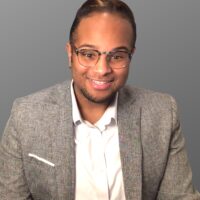
Preston James Ross is a public servant and LGBTQ advocate whose career spans healthcare, Congress, nonprofits, and local government, with a focus on driving lasting community impact. He began his career as a licensed practical nurse, witnessing firsthand how systemic inequities shape people’s lives. He later served on Capitol Hill for then-U.S. Senator Kamala D. Harris and U.S. Representatives Kweisi Mfume and Suzanne Bonamici, where he worked on constituent services, office operations, and legislative priorities. Today, he serves as Chief of Staff and Policy Advisor to the Prince George’s County Council Chair Edward Burroughs III, overseeing major initiatives that support youth employment, senior services, local economic development, and the County budget.
Preston also chairs the Young Nonprofit Professional Network of DC, where he fosters leadership pipelines for emerging nonprofit professionals across the DMV region. An advocate for inclusive policymaking, Preston brings a deep commitment to building stronger, more equitable communities through every role he holds.
Perceived Threats and Queer Realities in Washington, DC, and Germany
In the aftermath of Donald Trump’s election in 2016 and his resurgence in 2024, LGBTQ+ communities across the United States have confronted a shift in how safety is understood, felt, and enforced. During our week in Washington, DC, as part of the American-German Institute’s LGBTQ+ Exchange, we explored how police and public institutions engage with queer communities. What we discovered was surprising: unlike national and international trends that show rising anti-LGBTQ+ hostility, official data in Washington, DC, show no significant recent increase in hate crimes. Yet many queer individuals and organizations continue to feel acutely unsafe. This tension between what numbers suggest and what people experience reveals a troubling disconnect. While Washington stands as an outlier in reported incidents, emotional realities shaped by national rhetoric, lived trauma, and institutional distrust mirror broader patterns of fear seen across the United States and Germany alike.
Across the United States, political rhetoric increasingly targets LGBTQ+ people, particularly transgender and non-cisgender individuals of color, shaping a climate of fear that extends far beyond Washington’s borders. In 2023, state legislatures introduced more than five hundred bills impacting LGBTQ rights and passed at least seventy such laws. This escalation coincides with documented increases in lethal violence against transgender people of color. For example, Black transgender women were victims in 50 percent of recorded gun homicides of transgender and gender-expansive individuals in recent years. For many queer communities, these developments reinforce longstanding distrust in institutions from law enforcement to healthcare whose responses to discrimination and violence have often been inconsistent or inadequate. Even when local data show stability, the broader national landscape continues to generate a sense of vulnerability that profoundly shapes how safety is felt.
At both Whitman-Walker Health, a longtime provider of affirming healthcare and legal services for the LGBTQ+ community, and DC Mayor Muriel Bowser’s Office of LGBTQ Affairs, staff shared that they had expressed deep concern ahead of the 2025 inauguration. Despite receiving no specific threats, both engaged Homeland Security and local law enforcement amid fears fueled by past trauma, anti-LGBTQ+ rhetoric, and the political climate. At the Mayor’s Office, where most staff are queer people of color, concerns centered on visibility and vulnerability. Across organizations, security measures stemmed less from incidents than from anticipation of violence.
Official data adds important context to these perceptions. According to the Metropolitan Police Department of the District of Columbia (MPD), bias-related crimes based on sexual orientation and gender identity have fluctuated rather than followed a consistent trend. MPD data show forty incidents motivated by sexual orientation and fifteen by gender identity in 2023, compared with forty-five and twenty-one respectively in 2022, a modest decline after earlier spikes in 2020 and 2021. The U.S. Department of Justice similarly reports little change between 2022 and 2023, despite political volatility.
In Germany, a markedly different picture emerges. Authorities have recorded a steady rise in anti-LGBTQ+ attacks over the past several years. According to the Federal Criminal Police Office (Bundeskriminalamt, BKA), offenses categorized under “sexual orientation” and “gender-related diversity” have increased nearly tenfold since 2010. Crimes rose from 1,188 in 2022 to 1,785 in 2023—a 50 percent increase. In Dortmund, North Rhine-Westphalia, thirteen anti-queer offenses were documented in 2022, rising to twenty-one in 2023, which constitutes a 61 percent increase. The most common offenses are verbal insults and physical violence, followed by incitement to hatred.
A core component in addressing queer-hostile violence in both Washington, DC, and Germany is the work of LGBTQ+ liaison units within police departments. In Washington, the MPD’s Liaison Unit works to build trust through outreach and support. Though the unit noted no measurable rise in anti-LGBTQ+ attacks since the 2024 election, a lingering sense of vulnerability persists, especially among trans and non-cisgender people of color who face layered discrimination. Still, these units offer critical protection. The unit is known for compassionate responses in instances of domestic violence, and it shows what is possible when trained officers approach with empathy. This reflects the unit’s dual role: crisis response and internal sensitivity training. Similarly, in Germany, LGBTQ+ liaison officers Barbara Winkler and Rebecca Nockemann from the Münster Police Department, North Rhine-Westphalia, noted in an interview in October 2025 that they work very closely with associations and organizations of the queer community, holding a roundtable once a year to discuss queer-sensitive topics and how police officers can address queer people and their realities of life in a sensitive way.[1]
Yet even these efforts cannot override broader skepticism toward law enforcement in Washington and Germany. The fear is less about what might happen and more about lingering distrust between the LGBTQ+ community and law enforcement and how quickly progress can be reversed.
During our time in Washington, the heavy presence of uniformed military personnel at metro stops, street corners, and government buildings startled our German colleagues and unsettled residents. In August 2025, despite record-low crime rates, the Trump administration deployed 800 National Guard troops to assist local police. Framed as a safety measure, the move instead heightened anxiety. For many, particularly queer people of color, these displays felt less like protection and more like control, transforming the city into a space where security was promised but rarely felt.
These dynamics echo in Germany. Though LGBTQ+ legal protections are comparatively strong there, there is growing concern about right-wing extremism and the transnational influence of American culture wars. Debates in the United States over gender identity, education, and marriage equality often reverberate across borders, fueling a shared sense of vigilance among queer communities.
In response, the German federal government launched the Queer Leben (Queer Living) action plan in November 2022, outlining 130 measures to strengthen legal recognition, safety, and inclusion across six key areas: legal recognition, participation, safety, health, community structures, and international cooperation to improve the lives of LGBTQIA+ individuals. As of June 2024, eighty-three measures had already been implemented, reflecting Germany’s strong institutional commitment.
Still, many queer individuals in Germany continue to feel unsafe. A 2024 international study cited by LSVD+, Germany’s largest queer civil rights organization, found that 40 percent avoid holding hands in public, 21 percent avoid certain places, and 34 percent conceal their identity at work. This underscores the gap between policy progress and lived experience.
Our time in Washington, DC, left us with a defining question: what does it mean to feel safe? Across DC and Germany, legal protections and data alone cannot guarantee security. Safety must be co-created through trust, empathy, and shared power. Real protection begins when the needs of communities are heard and embedded in institutions. For queer people on both sides of the Atlantic, safety is not only about being seen, but being believed, protected, and empowered.
[1] Barbara Winkler and Rebecca Nockemann (Münster Police Department), interview with author, October 2025.
This article is part of the project “Building LGBTQ+ Communities in Germany and the United States: Past, Present, and Future” and is generously funded by the Transatlantik-Programm der Bundesrepublik Deutschland aus Mitteln des European Recovery Program (ERP) des Bundesministeriums für Wirtschaft und Energie (BMWE) (Transatlantic Program of the Federal Republic of Germany with Funds through the European Recovery Program (ERP) of the Federal Ministry for Economics and Energy (BMWE)).