
Fotomovimiento via Flickr
We Could Schaffen Das, But We Won’t

Elizabeth Hotary
Communications Officer
Elizabeth Caruth Hotary is the Communications Officer at AGI, where she leads strategic communications, digital content management, and public engagement initiatives designed to elevate the Institute’s profile and expand its reach among policymakers, scholars, donors, and the public. She coordinates AGI’s research agenda; manages the editorial process from concept through distribution for AGI’s articles, publications, and digital content; produces AGI’s podcast, The Zeitgeist; and oversees the Institute’s media outreach efforts. She collaborates with leadership teams and external partners to ensure AGI produces high-quality, timely, and impactful content. She also manages relationships with AGI’s Board of Trustees and Non-Resident Fellows.
In over ten years at AGI, Ms. Hotary has contributed to research on populism and extremism, workforce education, and immigration and integration. She has co-led AGI study tours across the United States and Germany.
Before joining AGI, Ms. Hotary taught English at a secondary school in Herne, Germany, through the Fulbright Program. During her time as a Fulbrighter, she volunteered with the U.S. Consulate Düsseldorf’s MeetUS program, traveling to schools across North Rhine-Westphalia to engage secondary school students in discussions about the United States. She has previous experience at the Josef Korbel School of International Studies at the University of Denver and WorldDenver, a nonprofit global affairs organization.
Ms. Hotary received her MA from the Josef Korbel School of International Studies at the University of Denver, where she was a Marc Nathanson Fellow. She graduated magna cum laude from the University of Arkansas with degrees in International Relations, European Studies, and German. She is also an alumna of the Aspen Seminar for Young European Leaders, “Next-Gen Europe: Leading for Values.”
__
EU migration policy reform still stalled five years after peak of crisis
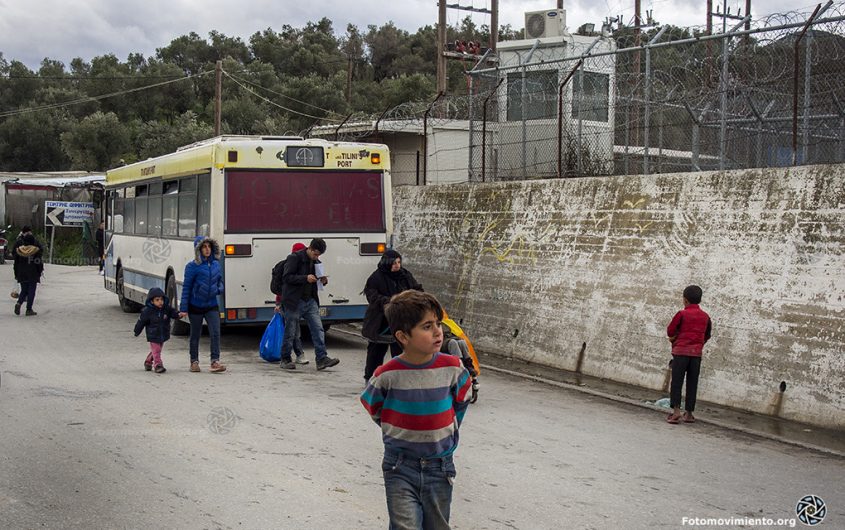
The crisis that hit Europe in 2015 has never gone away. This summer, Germans reflected on the fifth anniversary of Chancellor Angela Merkel’s statement, “wir schaffen das” (we’ll manage it); experts cited successful integration efforts with refugees graduating from integration classes and seeking full-time employment. However, the fire that destroyed the refugee camp in Moria, Greece, on September 9 starkly demonstrates the enduring failure of the European Union to reform its asylum policy to manage the refugee situation in its neighborhood and at its doorstep.
German politicians have been visiting the Greek camps for years, calling for Germany to take more refugees. In March, as European countries closed their borders in response to increasing cases of COVID-19, EU leaders also scrambled to negotiate with Turkey after President Recep Tayyip Erdogan announced the country would no longer stop asylum seekers who wished to enter the European Union. Throughout the summer, Human Rights Watch warned of overcrowded conditions, human rights abuses, and the inability of camps to manage coronavirus outbreaks on Greek islands. On September 2, Save the Children released a report stating refugee children were worse off at Europe’s borders than they were five years ago.
There were high hopes that Germany would use its six-month term of the EU Council Presidency to advance often-stalled migration reforms. But the pandemic shifted the Presidency’s priorities, and Germany has focused on using its political capital to negotiate the Multiannual Financial Framework, Next Generation EU (the bloc’s coronavirus recovery package), and the final Brexit deal with the United Kingdom. A majority of Germans say they favor an updated (and tougher) EU migration policy, and the EU Home Affairs Commissioner Ylva Johansson is optimistic the German presidency could still move migration policy reform forward after tackling the budget and Brexit.
Asylum policy reform remains one of the most contentious issues in the EU, and even within the German government, debates about asylum policy have been brewing for a while. The backlash to Chancellor Merkel’s decision to open Germany to over one million asylum seekers is still felt in Germany: right-wing violence is on the rise, populist parties made huge electoral gains following 2015, and a slim majority of Germans now disagree with the chancellor’s refugee policy from 2015. Several German cities and states (whose governments are led by coalitions across the political spectrum) have requested to resettle refugees, but the federal government has rejected those requests.
German interior minister Horst Seehofer (CSU) based the rejection on the need for reform at the EU level, positing that it would be more difficult to negotiate reforms at that level if local and state governments were pursuing their own refugee policies. Countries in the east remain just as opposed to hosting asylum seekers now as they were in 2015, southern states lacking in resources continue to host the most refugees in Europe, and the refugees bear the burden of inadequate housing, inedible food, and inhospitable neighbors.
As Europe’s largest economy, current EU Council President, and one of the top ten refugee host countries, Germany is poised to be a leader and honest broker in moving forward EU asylum policy reform. On September 10, Germany, together with France, agreed to accept over 400 children who had been displaced in the Moria fires, and throughout the summer, almost 300 children were relocated from Greek refugee camps to Germany. But this action only addresses the immediate problem, not the systemic one. The recent events in Greece prove that Germany and Europe must prioritize reforming asylum policy to mitigate the current crisis before it spills to the rest of the continent.