
Krzysztof Sitkowski via Wikimedia Commons
The Minilateral Turn in Transatlantic Security Cooperation?

Nele Marianne Ewers-Peters
Maastricht University
Dr. Nele Marianne Ewers-Peters is a DAAD/AGI Research Fellow in Fall 2025.
Dr. Nele Marianne Ewers-Peters is Assistant Professor for European Security at the Faculty of Arts and Social Sciences (FASoS) at Maastricht University, the Netherlands. Her research is at the intersection of European security and global governance. She is particularly interested in examining transatlantic security cooperation with a focus on the EU-NATO relationship. Previously, she was Lecturer at Helmut Schmidt University of the Federal Armed Forces in Hamburg, Germany, and DAAD Postdoctoral Research Fellow at Johns Hopkins School of Advanced International Studies (SAIS) in Washington, DC. Nele holds a doctorate from the University of Kent and degrees from the University of Bath and University of Bremen.
Nele’s research project at AGI explores the rationales and objectives behind states’ decision to initiate and establish so-called minilateral security cooperation (MSC) frameworks alongside existing multilateral security organizations such as NATO and the European Union. While multilateral organizations have faced increasing pressures and contestations as well as political deadlocks and bureaucratic obstacles, states have opted for alternative forms of security cooperation. Her project thus seeks to examine and compare the approaches to establishing MSC by Germany and the United States.
Her research has been published with the British Journal of Politics and IR, Defence Studies, European Security, and German Politics. Nele is the author of Understanding EU-NATO Cooperation: How Member States Matter (Routledge, 2022) and co-editor of NATO 2030: Towards a New Strategic Concept and Beyond (Brookings, 2021).
How Minilateralism Fits into Trump’s Deal-Making Foreign and Security Policy
Only two weeks after the re-election of Donald J. Trump as the forty-seventh president of the United States, the defense ministers of Europe’s five heavyweights—France, Germany, Italy, Poland, and the United Kingdom—came together for the first time in Berlin to establish the Group of Five (also known as the E5). While their initial focus was to ramp up financial and military aid in support of Ukraine’s fight against Russia’s aggression, it is now also widely understood as an initiative by Germany’s Boris Pistorius and France’s Sébastien Lecornu to counter the uncertainty about the future U.S. commitments to European security and defense. With the lessons learned from Trump’s first presidential term and his confrontational rhetoric toward U.S. partners, European NATO allies alongside Canada have willingly agreed to increase their national defense spending and to commit an overall 5 percent of their GDP by 2035 at this year’s NATO summit in The Hague.
Yet, with Trump’s approach of, “if we can’t make a good deal for America, then we will quickly walk from the table,” as already voiced in his 2016 foreign policy speech, the era of deal-making foreign and security policy has long begun. Not only for the United States’ economic and trade policy but also in foreign and security policy, Trump pursues bilateral deals to make a greater gain for himself, his family, and his administration. In contrast, NATO and the Euro-Atlantic security community are built on consensus, collective action, and solidarity among its allies. With Trump’s deal-making foreign policy, the question concerning future U.S. engagement in Europe looms large over European leaders’ heads. Given the shortages in national military capabilities and supplies across the board, the fragmented nature of Euro-Atlantic security, and diverging threat perceptions of NATO allies, especially along the traditional east-south and north-south division lines, the question is whether Trump understands the importance of minilateral—i.e., flexible, small group—security frameworks not only for transatlantic security but also for U.S. security and defense policy? What is more, looking toward the next few years, how does minilateralism fit into Trump’s deal-making foreign and security policy? And, while European security has experienced a proliferation of such minilaterals as a response to Russia’s war against Ukraine, will they actually receive greater attention in managing security relations under the Trump 2.0 presidency?
Interestingly, during an interview with a former US official, it has been observed that “at the height of its power, the United States found alliances most important, but now the United States finds alliances less important while its relative global power is declining.”[1] This piece undergirds this statement by sketching out the United States’ approach to security cooperation, bilaterally, minilaterally, and multilaterally. It then focuses on the changing engagement in minilateral security cooperation frameworks across previous U.S. administrations based on over twenty-five interviews and conversations with experts, former and current officials, and policymakers conducted in Washington, DC, in the autumn of 2025. Finally, this piece concludes with a number of assumptions and expectations about how minilateralism fits into Trump’s deal-making foreign and security policy during his second presidential term.
Bilateralism Trumps Minilateralism and Minilateralism Trumps Multilateralism?
As the creator of the world’s most important international security organizations, the United States has shaped multilateral organizations and the international rules-based order significantly. Multilateral cooperation and particularly international security organizations have served the U.S. interests well. The United Nations Security Council (UNSC) has authorized several military campaigns and operations led by the United States, and the North Atlantic Treaty Organization (NATO) has supported the U.S.-led war against global terrorism by triggering Article 5 after the 9/11 attacks.
Yet, not only under Trump’s first presidential terms—as well as during the first eleven months of his second presidential term—but several prior U.S. administrations have also over time questioned the utility of multilateral organizations for advancing the United States’ own foreign policy and security interests. From an outsider’s perspective, the U.S. commitment to multilateral cooperation is thus widely perceived as ambivalent and characterized by “dramatic inconsistency.”[2]
The U.S. approach to security cooperation can be summarized as pragmatic, utilitarian, and action-oriented.
The United States has created a wide hub-and-spoke network of bilateral, trilateral, and minilateral security ties in East Asia and the Indo-Pacific[3] bringing together a range of partners and allies that would otherwise not necessarily cooperate with each other. In contrast, security cooperation in the Euro-Atlantic essentially takes places through multilateral forums such as NATO and the EU. Nevertheless, the Euro-Atlantic security order is also based on a network of bilateral agreements as well as minilateral cooperation among small groups of states, such as the Euro Quad, the Nordics, and the Bucharest 9. Discussions and negotiations take place in parallel in these frameworks. What has been particularly intriguing is the varying use of bilateral, minilateral, and multilateral frameworks throughout past U.S. administrations.
Minilateralism as a Tool of U.S. Foreign Policy
During the Clinton and Bush administrations, the Euro Quad (composed of France, Germany, the UK, and the United States) and the Quint (Euro Quad plus Italy) were vital forums for strategic discussions on Afghanistan, counterterrorism, and the Western Balkans. However, with the announcement of the U.S. pivot to Asia, President Obama did not take European security seriously at first and shifted the United States’ foreign and security policy away from Europe to focus on the Indo-Pacific. With this strategic reorientation, he actively engaged in the G7 and G20 formats—particularly the latter had received greater attention due to the inclusion of Asian countries—instead of minilateral forums within NATO. What is more, since the EU is present in the G7, it was observed that Obama did not see the need to engage in the Euro-Quad to discuss political and security issues, such as economic security vis-à-vis China and sanctions against Russia which can be easily done at the G7.[4]
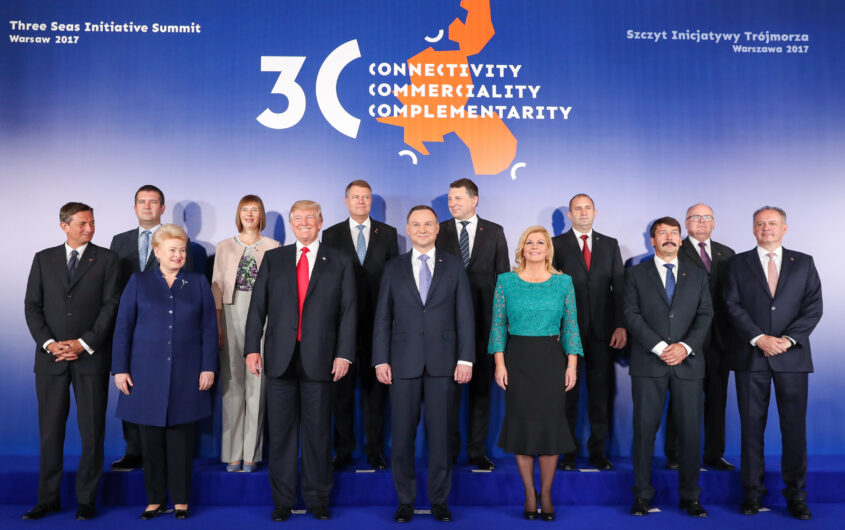
Trump’s first presidential term was characterized by his “America First” foreign policy, which was accompanied by unpredictability, strategic uncertainty, and impulsive decision-making. Between 2017 and 2021, the United States withdrew from nineteen multilateral institutions and international agreements, especially from those with majority voting rules.[5] What is interesting, however, is that in the beginning of Trump’s first term, not much had been reported about Euro Quad meetings, but instead, Trump approached frameworks such as the Bucharest 9 and the Three Seas Initiative (3SI) especially to spark further anti-German rhetoric among Central and Eastern European countries.[6]
When Biden entered the White House in 2021, he announced that “America is back.” His administration sought to re-build trust and credibility among European partners and allies. Following traditional U.S. foreign policy lines, Biden pursued an interest-based approach toward European security, also in the context of the Russia’s invasion of Ukraine in February 2022. Biden’s administration continued the “Europe bashing” in terms of defense spending on the one hand but also wanted Europeans to acquire American military capabilities and assets on the other hand. What is more, during an interview, a former U.S. official reported that Biden seemed to have often confused minilateralism with multilateralism. Even though strategic partnerships and minilaterals in the Indo-Pacific, such as the Quad and AUKUS, were strengthened and seen as vital for advancing U.S. interests, Biden sought to meet up in larger groups and broaden their purposes, seemingly with the motto “the bigger, the better” in mind.[7] In the context of European security, the Euro Quad was regularly used and consulted for discussing new policies and initiatives in NATO, but for example, the Ukraine Defense Contact Group (UDCG)—also known as the Ramstein Group—has quickly grown beyond a minilateral forum with over fifty participating states.
Overall, the U.S. approach to security cooperation can be summarized as pragmatic, utilitarian, and action-oriented. Whether bilaterally, minilaterally, or multilaterally, for the United States it is about “getting things done” and “making things work,” particularly to advance the United States’ national security and commercial interests.
How Minilateralism Fits into Trump’s Deal-Making Foreign and Security Policy
With Trump’s re-election in 2024, strategic uncertainty and “intentionally ad hoc decisions” aiming at the spread of greater unpredictability have returned to the White House. After the first 300 days in office, Trump has announced the withdrawal from a number of multilateral organizations, yet the United States’ overall approach remains somewhat ambiguous. While policymakers and think tankers alike are eagerly awaiting the introduction of the National Security Strategy (NSS) and accompanying National Defense Strategy (NDS) guiding the Trumpian 2.0 foreign, security, and defense policy, the announcement of putting the Western hemisphere back into the spotlight already conveys one key message: the United States will neither prioritize European security cooperation nor Asian partnerships countering China. Nevertheless, even for Trump, it is clear that any threats facing the United States cannot be encountered without U.S. allies and partners.
Minilateralism provides a useful and complementary framework to security cooperation in a time of higher uncertainty, resource scarcity, and multiple security challenges.
During Trump’s first presidential term, the administration focused on deterring China through building and strengthening alliances and minilateral coalitions in the Indo-Pacific. However, with this shift toward the Western hemisphere and homeland security, it is likely that the Trump 2.0 administration is going to neglect these strategic minilaterals. Similarly, the Euro Quad has not been much liked by Trump—as a continuation from his first term—as he prefers to cooperate with those European partners with whom he has good personal relations, such as Italy’s Giorgia Meloni and Finland’s Alexander Stubb.
This yields to expectations about how already existing minilateral frameworks fit into Trump’s deal-making foreign and security policy and about the potential implications for transatlantic security cooperation through NATO. Generally drawn from some lessons learned from his first presidential term, it can be expected that Trump might follow former British Prime Minister Lord Palmerston’s motto of “we have no eternal allies, and we have no perpetual enemies.” It is likely that Trump will choose to engage with whom he connects and deems helpful to advance his and the U.S. national interests.
Given Trump’s overall aversion toward multilateral organizations, minilaterals in fact fit right into his deal-making foreign and security policy approach for several reasons. First, minilaterals are flexible, interest-based, issue specific, and most often also informal. Especially their flexibility and interest-based nature fall into Trump’s objectives of choosing his preferred framework for action. Second, minilaterals are composed of like-minded states that share at least the same goals and objectives. With Trump’s divergence away from democratic and liberal values, while also the political landscape is shifting across Europe, minilaterals thus allow those states to cooperate that share the same set of objectives, though not necessarily the same set of values. Third, in a world of greater uncertainty, complexity, and unpredictability, minilaterals—similar to alliances in their original sense—help advance the United States’ national interests while also controlling both allies and rivals simultaneously. Lastly, minilaterals prevent the formation of counter-alliances, and, more importantly, enable the United States to face a multiplicity of threats and security challenges while experiencing resource scarcity because partners help to “hold the line.” Minilaterals therefore facilitate the United States to prioritize specific threats; however, these need to be widely shared among participating states.
Minilaterals to Save the Transatlantic Security Alliance?
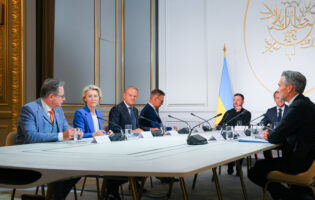
With the upcoming publication of the NSS and NDS, the message is clear. U.S. foreign and security policy under Trump 2.0 will neither prioritize European security nor Asia and the Indo-Pacific. Even though European allies have committed to shift the burden within NATO and to spend 5 percent of their GDP on security and defense by 2035, tensions in the transatlantic security relationships under the current U.S. administration are inevitable given the preference divergences within NATO. Minilateralism provides a useful and complementary framework to security cooperation in a time of higher uncertainty, resource scarcity, and multiple security challenges. The only problem is that the Trump 2.0 administration has yet to recognize these advantages for its own interests and for preserving the transatlantic alliance. The minilateral meeting among European leaders and the U.S. president in August 2025 has shown the benefits of minilateral frameworks by bypassing unlike-minded states. Both sides of the Atlantic need to make careful use of minilateral frameworks in the future to pragmatically cooperate on shared issue sets and to eventually transform the transatlantic security relationship based on today’s needs.
[1] Interview with U.S. official on October 30, 2025.
[2] Geoffrey Wiseman, “The United States and fragmented multilateralism: bookending a century of US ambivalence towards formal international organizations,” Third World Quarterly, 46 no. 15 (2025): 1857-1877, https://doi.org/10.1080/01436597.2025.2465519.
[3] Yasuhiro Izumikawa, “Network Connections and the Emergence of the Hub-and-Spokes Alliance System in East Asia,” International Security 45 no. 2 (2020): 7-50, https://doi.org/10.1162/isec_a_00389.
[4] Interviews with former U.S. officials on October 7, 2025; October 30, 2025; and November 5, 2025.
[5] Tim Heinkelmann-Wild, “Die Abkehr von Hegemonialmächten aus „ihren“ Ordnungen: Eine Erkundung des Rückzugs der USA aus internationalen Institutionen jenseits von Trump,” Zeitschrift für internationale Beziehungen, 1/2025: 6-25, https://doi.org/10.5771/0946-7165-2025-1-6.
[6] Interview with former U.S. official on October 30, 2025.
[7] Interview with U.S. think tanker on October 31, 2025.
Supported by the DAAD with funds from the Federal Foreign Office (FF).