
ChiralJon via Wikimedia Commons
Populists on Both Sides of the Atlantic Are Selling the Past. And Voters Are Buying It.

Simon Morris-Lange
Allianz Foundation
Dr. Simon Morris-Lange is a DAAD/AGI Research Fellow in Fall 2026. He is Head of Research at Allianz Foundation in Berlin, where he leads the Foundation’s research and knowledge-sharing portfolio. His work focuses on civic action and democratic resilience across Europe, with a particular emphasis on younger generations. Prior to joining Allianz Foundation, he served as Deputy Head of Research at the Expert Council on Integration and Migration (SVR), a leading non-partisan think tank on migration and immigrant integration. He holds a doctorate in International and Comparative Education from Humboldt University of Berlin and writes regularly on democratic resilience and education reform.
Dr. Morris-Lange’s research at AGI examines the political appeal of nostalgia-based narratives and tactics. A central aim of his fellowship is to refine a novel backlash diagnostics tool, which he previously co-developed with political scientists at the WZB Social Science Center Berlin, the SINUS Institute, and with support from the psychometric scale experts at the GESIS Leibniz Institute for the Social Sciences. The instrument measures citizens’ susceptibility to backlash politics (Alter and Zürn 2020)—a distinct form of political populism that fuses nostalgia for a supposedly better past with radical tactics aimed at forcing society back to that prior condition.
A striking pattern has become apparent in politics across Europe: populist parties and movements are mobilizing voters by tapping into nostalgia. Their message is simple: A better society once existed, but out-of-touch elites have put the country on the wrong track. The solution, they argue, is not to imagine a radically different future, but to recover what has been lost—even if that means rolling back women’s rights and reviving old racial prejudices. And voters across Europe appear to be listening.
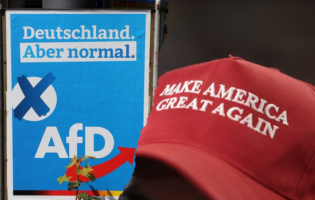
You may now well be thinking of MAGA. And rightly so: Donald Trump’s promise to “Make America Great Again” echoes this strategy. At its core lies the same nostalgic call to arms: a return to an idealized past, which supposedly has been lost to too much immigration, too much cultural change, and elites who do not care about ordinary people.
Today, nearly 30 percent of European voters support populist parties, roughly twice the share in the early 2010s.[1] While far-left populists have gained ground in some elections, the overwhelming majority of populist voting has gone to the far-right, whose success is often attributed to many voters’ growing economic anxieties and feelings of political deprivation, as well as pronounced fears of so-called ‘others’—especially refugees and other newcomers. Less obvious, but no less important to this mobilization success, are narratives of nostalgia, which allow political actors to wrap anti-migrant, anti-democratic, and other potentially divisive messages in the far more agreeable promise of a return to “the good society.”
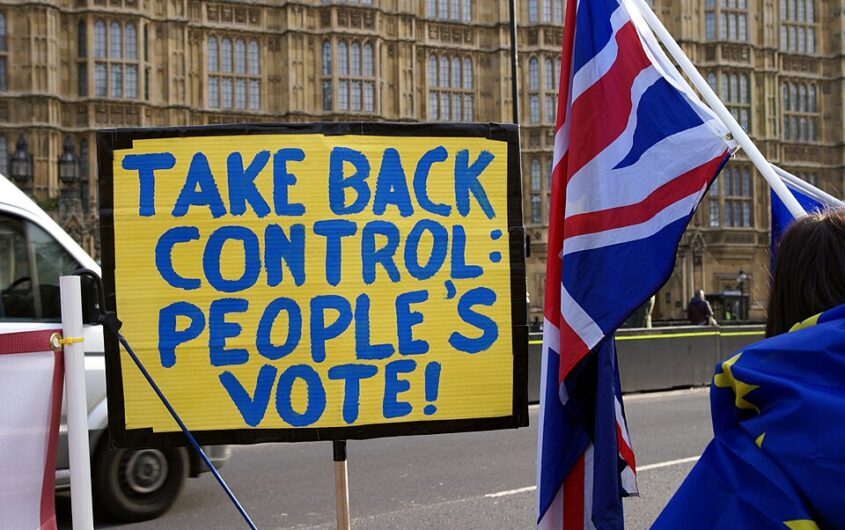
Specific appeals vary but share a common thread. The Brexit campaign in the United Kingdom promised to “take back control” from the European Union and to return to a culturally reassured and geopolitically strong Britain. Across the North Sea, the far-right Sweden Democrats have been campaigning on folkhemmet, or “the people’s home,” evoking an idealized vision of Swedish society during the mid-twentieth century. Meanwhile, the Alternative for Germany has repeatedly called for a “return to normalcy”—a claim that critics interpret as a dog whistle for the party’s push for remigration and a broader rollback of women’s and minorities’ rights, along with a hollowing out of key democratic institutions.
This mix of retrograde political aspirations and radical tactics has become a shared feature of authoritarian populist movements across Europe and the United States.
Despite these examples, appeals to the past are not inherently radical or anti-democratic. The tactics used to advance them, however, can be. These include online trolling, the deliberate spread of disinformation, and threats of violence—all of which can intimidate political opponents and further erode already fragile public trust in government.
This mix of retrograde political aspirations and radical tactics has become a shared feature of authoritarian populist movements across Europe and the United States. Political scientists Karen Alter and Michael Zürn have described this form of mobilization as backlash politics: a political strategy that promises a return to a prior social condition while challenging the political norms and democratic institutions of the present.[2]
Millennial Men Are Most Susceptible
The success of backlash politics depends not only on the political actors who promote it, but also on the public attitudes that make its narratives and tactics resonate.
To understand who is drawn to nostalgia, radicalism—or both—a transdisciplinary research team from the Allianz Foundation, the SINUS Institute, and the WZB Berlin Social Science Center developed a backlash affinity scale between 2024 and 2026.[3] The diagnostic tool consists of sixteen validated questions designed to measure individuals’ susceptibility to backlash politics.[4]
Findings from the first deployment of the tool in France, Germany, Italy, Poland, and Spain in mid-2025 suggest that conditions are taking shape for backlash politics to resonate across the wider population. More than half of respondents (53 percent on average) in the representative survey felt disillusioned with politics as it stands. About the same amount (50 percent) feel deeply nostalgic for a prior social and political condition. They believe their country is on the wrong track and want to “turn the wheel”—rather backward, not forward.
For some, this desirable past is simply a time when people had more confidence in political leaders and the democratic process. For them, nostalgia is not automatically regressive. For others, however, it does carry darker undertones. 32 percent are quite explicit in wanting to regress to a prior version of their country in which migrants, trans people, and other minorities are silenced and men regain supposedly lost privileges.
More troubling still, a radical fringe is discernible. One in twelve Europeans unequivocally supports the use of extraordinary tactics to force political change. According to them, acceptable political actions include rageful rhetoric, online hate campaigns, and violence against political opponents. An even higher share (19 percent) say they are willing to accept such actions at least to some degree.
Perhaps unsurprisingly, older Europeans are somewhat more susceptible to nostalgic appeals, having often lived through an era that populists in their country now portray as a “golden age.” But firsthand experience of that past is no prerequisite for nostalgia, nor do Boomers have a monopoly on it. The backlash affinity scale shows that Europeans in their mid-30s are just as likely as those in their 60s to feel its pull. More alarmingly, people in their 30s are nearly three times as likely to condone political violence and other radical actions. This tendency is particularly pronounced among Millennial men, especially those who feel socially isolated. Here, too, the parallels with the United States are hard to miss.[5]
Longing for a prior social condition need not necessarily be regressive or authoritarian.
These findings should not, however, be taken to suggest that young men as a whole are predisposed to radicalism. Rather, they point to the important contemporary task of investigating why some men are particularly susceptible to such appeals, both in Europe and the United States.
Why Nostalgia Resonates (Today)
Nostalgia is not new to politics. The longing for an earlier, supposedly better society is a recurring feature of political life—not least because it is a deeply rooted feature of human psychology. As a case in point, U.S. presidential candidates have long sought to mobilize support by promising to restore a supposedly lost golden age. Bart Bonikowski and Oscar Stuhler’s in-depth analysis of U.S. presidential campaign speeches from 1952 to 2020 illustrates just how persistent this rhetorical strategy has been: Both political parties have a long tradition of nostalgic pandering, especially in races where their candidate is challenging an incumbent president.[6] The research also shows that nostalgia does not resonate equally at all times. It tends to gain more traction during periods of crisis and when people lose faith in politics’ ability to solve today’s problems and deliver a better future.
This dynamic appears to be at work in Europe and the United States today. Beneath voters’ much-discussed economic, cultural, and geopolitical anxieties lies a deeper loss of confidence: the belief that the future can be better than the present and that democratic politics can help make it so.[7] As this belief continues to erode, nostalgic appeals can gain even more traction—and visions of restoring an idealized past, however regressive, can become more compelling.
How Nostalgia Could Be a Force for Democracy (Tomorrow)
In politics, nostalgia is often dismissed as a lie, as being reactionary and manipulative—as something only the other side (often those on the far-right) would do for political gain.[8] Such normative views are unhelpful. Not only because there is enough evidence to show that nostalgia has long been serving all sides of the political spectrum, but also because longing for a prior social condition need not necessarily be regressive or authoritarian.
Nostalgia can also express a longing for greater solidarity and togetherness, for a stronger commitment to the common good, or for more decency in political discourse. For such nostalgia to be effective, however, it must begin with an honest reckoning. That means acknowledging that the past was far from perfect. And, at the same time, that there were indeed things that our societies once did better—and those we can reclaim.
In the coming years of breakneck pace of change and disruption, the future may continue to seem more frightening than promising to many people. Therefore, an earnest look back at tangible, hard-won rights and institutions could provide meaningful support to pro-democratic mobilization—not by idealizing the past, but by recognizing what is worth reclaiming and preserving and by drawing on the strength of collective memory to imagine a better society still to come.
[1] PopuList (2026), based on Döring and Manow (2024).
[2] Karen J. Alter & Michael Zürn, “Theorising Backlash Politics: Conclusion to a Special Issue on Backlash Politics in Comparison,” The British Journal of Politics and International Relations 22, no. 4 (2020), 739-752, https://doi.org/10.1177/1369148120947956.
[3] Further support in psychometric scale development was provided by the Leibniz Institute for the Social Sciences (GESIS).
[4] Allianz Foundation, “Between Nostalgia and New Horizons. How Young Europeans Imagine and Shape the Future,” Berlin, 2026, https://next-generations-study.com.
[5] See, for example, James Piazza, “Incel Beliefs and Support for Political Violence Among U.S. Males: The Mediating Effects of Masculinity Stress, Aggression, Outgroup Hate, and Illiberalism,” Crime and Delinquency, January 5, 2025, https://doi.org/10.1177/00111287241310820.
[6] Bart Bonikowski and Oscar Stuhler, “Reclaiming the Past to Transcend the Present: Nostalgic Appeals in U.S. Presidential Elections,” Sociological Forum 37, no. S1 (December 2022), 1263-1293, https://doi.org/10.1111/socf.12838.
[7] Armin Schäfer and Michael Zürn, (2023) The Democratic Regression: The Political Causes of Authoritarian Populism (Hoboken, NJ: Polity Press, 2023).
[8] Alastair Bonnett, Left in the Past: Radicalism and the Politics of Nostalgia (New York, NY: Bloomsbury Academic, 2010).
Supported by the DAAD with funds from the Federal Foreign Office (FF).